Carroll’s CSR pyramid is a framework that explains how organisations can take social responsibility, it highlights the four important types of responsibility of organisations. The more important responsibilities are placed towards the bottom of the pyramid. Carroll’s CSR pyramid suggests that firms should engage in practices and take responsibility at four levels – Economic, Legal, […]
Blog
Deviant Consumer behaviour
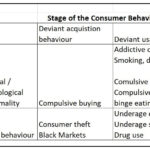
Consumers can often be their own “worst enemies”. Consumers’ desires, choices, and actions often result in NEGATIVE consequences to themselves and / or to society. Social pressures, a culture’s value of money, exposure to unattainable ideals of success, social status, and / or beauty – all contribute to negative consumer behavior. Consumers are NOT always […]
Schiffman and Kanuk’s model of Consumer Behaviour

Schiffman and Kanuk uses a marketing segmentation approach to explain Consumer Behaviour. The authors have explained the model in their book named ‘Consumer Behaviour’. Consumer buying behaviour is the study of the buying behaviour of consumers; it tries to understand the decision making process of the consumer, their shopping habits and purchasing behavior. Schiffman and […]
Responsible Management

Responsible management in business today means balancing the interests of the entire world (people, business, environment) in order to benefit existing as well as future generations. Identify a company or organisation of your choice. identify ONE major responsible management challenge your case company faces. Choose ONE of the following corporate functions to address that challenge […]
Balanced scorecard (BSC): Framework to identify and improve internal functions

Balanced scorecard (BSC) is a strategic management performance metric that provides a comprehensive view of the business. In addition to finance measures, it also measures customer satisfaction, internal processes, and the innovation and improvement activities of the organization. Challenges of Traditional Budgeting Several executives felt for a long time that the traditional measures of financial […]
MASLOW’S Need Hierarchy Theory

Maslow’s Need Hierarchy Theory: Abraham Maslow propounded a theory of human motivation. Maslow identified five sets of human needs. The five sets of needs are arranged in a hierarchy of their importance to individuals. Maslow’s Hierarchy of Needs Maslow’s hierarchy of needs includes the following: Physiological needs Safety needs Social needs Esteem needs Self Actualisation […]
Churchill & Lewis Growth Stage Model
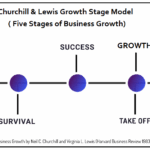
The Churchill & Lewis Growth Stage Model is a useful framework that helps analyse what particular stage of growth a small firm is at, and the issues and problems that they need to be aware of – now as well as in the future as the business grows. The five stages of small business growth […]
Belbin’s Team Role Theory

The Belbin Team Roles theory suggests how to select the right mix of people for a team that will help the team succeed. Every person has unique strengths and behaviour that can facilitate the progress of a team. Belbin’s theory identify behavioural strengths and weaknesses of workers at the workplace. Introduction While every firm desires […]
Tuckman’s theory: Various Stages of Group Development

Tuckman Model: Theory to understand the stages of team formation. This model reveals how teams transform as they go from the initial formation towards the completion of the project. You need a team to do take on bigger things and accomplish things faster. However, not every team works at the highest level of efficiency right […]
7 O’s framework of consumer research

The 7 O’s framework of consumer research helps marketing managers understand more about the consumers in the target market. The 7 Os stand for Occupants, Objects, Objectives, Organizations, Operations, Occasions, Outlets. Here’s what they mean. Occupants: Who buys, Who constitutes the market? Objects: What does the market buy? Objectives: Why does the market buy? Occasions: […]
Functional Level Strategies
Strategies for different functions of management are known as functional level strategy. Functional Level Strategy is concerned with operational level decision making, called tactical decisions, for various functional areas such as: Marketing Finance Production Logistics Research & Development Human Resource Functional level Managers operate at lowest hierarchical level of strategic management. This level is responsible […]
Hofstede’s Cultural Dimensions Theory
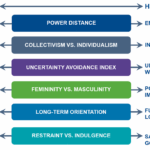
Organizational anthropologist Geert Hofstede is well known for his research studies on social values that suggest that cultures of different nations can be compared in terms of five dimensions. Developed by Geert Hofstede (1984), the cultural dimensions theory ((Hofstede’s Cross Cultural research work)) is a highly recognised framework for cross-cultural communication describing the effects of […]
EVS Project (Class 12 ICSE): SYJC

EVS Project (ICSE Class 12) – SYJC (30 Marks) EVS Project Steps to Conduct the Project Here are the steps for conducting the project work. Introduction of the project – (2 marks-1 page- back to back) Background of the subject, Justification of choosing the topic Importance of the project – (2 marks-1 side page) Why […]
McDonald’s: Internal External Factors, Marketing, Competition, Strategy
McDonald’s Internal External Factors, SWOT, Porter’s 5 Forces, Strategy, Marketing Mix. About McDonald’s McDonald’s is a fast food chain which originated in America, and was founded by the McDonald brothers Richard and Maurice in California. On a revenue scale, it is the world’s largest restaurant chain, catering to over 69 million customers on a daily […]
Entrepreneurship: Theories, Notes, Questions
An entrepreneur is someone who capitalizes on an opportunity to create a new business while talking the risks enjoying its rewards. Innovation in Business In a highly competitive world, it has become important for firms to be innovative in order to differentiate itself from competition and to get a competitive edge. Innovation in business can […]
Marketing Ethics: Various Concepts
Ethics in marketing promotes transparency, honesty, fairness in marketing. Marketing ethics is what guide companies to do “the right thing” – be it implementing acceptable practices, dealing fairly with customers, complying with law, or be it caring for the community and environment. Companies are free to either develop their own ethical standards or they have […]
Understanding Consumer Culture: Theory and Definition
Consumer Culture are the ideas, beliefs, and practices related to consumption of goods and services. Usually, marketing strategies tend to shape consumer culture. Understanding consumer culture (for example: Focus on sustainability in consumer choices) enables businesses to develop effective marketing strategies, and also in product development. Consumer culture is a theory in marketing that suggests […]
Corporate Governance: Theories, Definition, Examples
Corporate governance refers to the collection of rules, practices, and processes to manage a company. Corporate governance is important to maintain the stability and integrity of companies as it promotes trust in the business environment. Studies suggest that there is a positive relationship between Corporate Governance and shareholders value. What is Corporate Governance? Investing is […]
Triple bottom line (TBL)

The triple bottom line (TBL) sustainability framework suggests that businesses today should strive to improve in three key areas: making profits, and caring for the people as well as the planet. The Triple Bottom Line theory focuses on social, environmental, and financial sustainability. By focusing on these three areas, it is possible to create a […]
LearnInMotion: HRM Case Study

Based on the information given on the company LearnInMotion, develop an HR Plan that you believe the company should implement for the next 2 years. Imagine yourself as the HR Manager the company recently hired. 1. Conduct a SWOT/TOWS Analysis to serve as the basis of your planning and key recommendations for the company. 2. […]