Customer Acquisition and Customer Retention are two essential strategies in marketing that focus on acquiring new customers and retaining existing ones.
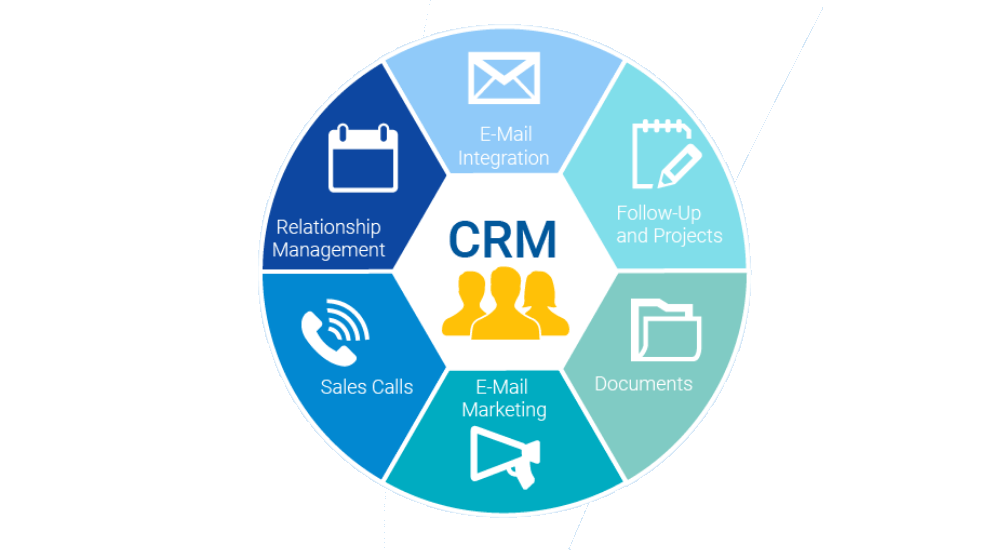
Customer lifecycle management (CLM) involves measuring various customer related metrics, which, when analyzed for a period of time, provides insights about the performance of a business. The four phases of Customer lifecycle include Marketing, Customer Acquisition, Relationship Management, Loss/Churn. A CRM system integrates all four phases of the customer life cycle into three major processes: solicitation, lead-tracking, and relationship management.
Customer acquisition and Customer retention strategies focus on attracting new customers through targeted marketing and sales efforts, and then focus on fostering loyalty, providing excellent service, and implementing personalized initiatives to keep existing customers satisfied, ultimately encouraging repeat business and long-term relationships.
Customer Acquisition
Customer acquisition refers to the process of attracting and acquiring new customers for a business. It involves various marketing efforts aimed at increasing brand awareness, generating leads, and converting prospects into paying customers.
Some common customer acquisition strategies include: Targeted Advertising, Social Media Marketing, Search Engine Optimization (SEO), Referral Programs.
Companies increase their profits by spending considerable time and resources searching for new customers. Companies develop advertisements to reach new prospects and to generate leads, they send direct mail and make phone calls to potential prospects, send their salespeople to participate in trade shows where they might find new leads, purchase names from list brokers, and more.
The acquisition process provides for the building of a set of expectations. Selecting the right business customer is key to a successful CRM initiative, as the selling process is where potential customers’ perceptions of value are defined.
Presenting a value proposition that can be delivered increases the chances for a successful relationship. Overpromising value results in a “no-win” situation that cannot be overcome by any CRM strategy.
Long-term relationships are desirable because organizations rely on other organizations to supply them, and eventually the consumer, with quality products and services.
Why Retention is Important
Customer retention focuses on maintaining and nurturing existing customer relationships to encourage repeat purchases, foster loyalty, and maximize customer lifetime value. It is generally more cost-effective to retain existing customers than acquiring new ones.
Some common customer retention strategies include: Personalized Communication, Customer Support and Engagement, Loyalty Programs, Upselling and Cross-selling, Continuous Improvement.
Many companies also lose around 20 to 40 per cent or more of their customers every year. Acquisition strategies are necessary to fill the pipeline with customers to counter the inevitable reduction of customers.
Customer equity is more dependent on customer retention than customer acquisition. Improving customer retention can lead to very significant increases in profitability.
As a result, acquisition strategies are necessary to feed the company’s pipeline with prospects that hopefully will soon become customers.
Retention strategies are profitable because of increased revenue from loyal customers and reduced costs in serving long-time customers.
Retention of long term is important as retained customers tend to buy more per year, buy higher priced options, buy more often, are less price sensitive, are less costly to serve, are more loyal, and have a higher lifetime value.
How to Retain Customers: Factors to Consider
Key points to remember when retaining customers:
- Recruit the right customers to begin with
- Once you have them, segment them by lifetime value
- Communicate with them to build loyalty
Companies need to mine their databases to identify the types of prospects who are likely to respond to acquisition efforts and become customers.
Here are some factors to consider when undertaking retention activities.
1. Reduce adverse selection.
Retention strategies work when companies target only those customers whose retention will be profitable.
Adverse selection involves targeting individuals who will have no interest in your offering or, if they do apply, will not qualify for your offering (e.g., charge cards and loans). Adverse selection hurts companies in two ways: wasted time and money in promotional efforts and negative word of mouth that inevitably results when applicants must be rejected.
2. Develop the acquisition program/offer through qualitative and quantitative marketing research. This helps companies to determine the benefits and weaknesses of their proposed program versus competitors’ programs.
3. Switching costs should be eliminated to make it easier for customers to buy your products/services.
4. Take advantage of acquisition timing. Firms must present their offer to the consumer at an appropriate time that coincides with life cycle or buying cycle changes.
Retention strategies also work best when industry retention levels are high and there is a significant steep change in a company’s customer base.
Studies suggest that over time, a small 5 % increase in retention can increase a company’s profitability to over 85%.
Encourage word-of-mouth referrals. This is achieved by paying for them (or offering discounts) or marketing to affinity groups that endorse your product to their members.
6. Improving the customer acquisition process is typically concerned with: acquiring customers at a lower cost; acquiring more customers for the same (or less cost); acquiring more attractive customers; acquiring customers utilising new channels.
Types of bonds that influence retention
- Programmatic bonds: Made up of rewards programs (E.g. priority treatment with regard to notices of sales and events, tickets, invitations, free merchandise, etc.) and procedures that make it difficult for customers to switch providers (termination penalties, lengthy forms to complete, lengthy-time involved, etc.).
- Humanistic bonds refer to the treatment given to customers by highly trained personnel
Retention Strategies
Here are some Retention Strategies that firms can use to retain customers.Give Preferential Treatment
Preferential treatment helps to retain customers. E.g. Special days and hours are often set aside for regular clientele.
Rewarding
Rewarding with tangible benefits to regular customers. This can be in the form of pricing or gift incentives in return for loyalty.
Introduce Reward Loyalty Programmes.
Personalisation
Personalisation has separate meanings.
Personalization over the Web: This refers to the ability of a customer to modify the website to suit his or her own purposes. e-commerce sites use cookies or personalization based on users’ preferences. Content is personalised to suit the preferences of the user
personalization during a more general service encounter: This refers to a consumer’s perception about how personally they are treated.
Customization
Customization in a more general service encounter refers to the ability of an organization to adopt its 4 P’s to the needs of a consumer or company.
This involves making use of Up-selling and Cross-selling.
More retention ideas
- Provide all customers with a card or register their credit cards
- Birthday Club
- Communicate with them
- Give them premiums if they shop a lot
Manage Migration
Migration is the change in customer value over time, and downward migration characterizes customers who buy less.
Customers downwardly migrate mainly for these three reasons:
- Dissatisfaction
- Attraction to a better attribute mix offered by alternative brands
- Change in life stage or life cycle
Measuring customer satisfaction and conducting defection analysis are valuable activities that firms must undertake.
Customer Churn
Too many companies suffer from high customer churn or defection. To reduce the defection rate, the company must:
- Define and measure its retention rate
- Distinguish the causes of customer attrition and identify those that can be managed better
- compare the lifetime value of a lost customer with the costs incurred to reduce the defection rate
Win-back Strategies
The most common reasons why customers leave are: poor service, poor handling of a complaint, disapproval of changes, feeling taken for granted.
Customer win-back is the process of firms’ revitalizing relationships with customers who have defected.
Defection analysis seeks to identify the reasons why customers leave.
These may be outside the organization’s control (moving, life cycle changes, novelty-seeking) or within the organization’s control (poor service, price, better competitive offerings).
Data mining techniques can reveal customer purchase or lack-of-purchase patterns that precede defection.
When it comes to the recapturing of lost customers, the Second Lifetime Value (SLTV) of the customer becomes an important metric (Stauss and Friege 1999).
The SLTV guides the decisions how much should be spent to reacquire customers.
Successful win-back program requires past purchase performance to be integrated with anticipated future purchase potential.
Strategies for saving a defector.
Quick Strategy
If personally told to you that they are no longer buying from you:
- Listen and acknowledge their complaint.
- Take decisions. Avoid hiding behind your manager or boss.
- Offer a generous solution.
- Give the customer options.
- Be gracious whatever he decides.
- If the customer accepts your direct win-back solution, analyse what you did was successful and record everything on the customer’s file.
Strategies for saving a customer who is about to defect
CPR ( Comprehend, Propose and Respond ) is used on customers about to defect.
- Comprehend: listen to discover what triggered their dissatisfaction.
- Propose: Ask the customer what they need to solve the problem.
- Respond: Three scenarios are possible after making an offer: Agreement. Tentative agreement in which case you must Make another offer. Disagreement in which case you must not burn any bridges
Customer Loyalty and Retention
Customer Retention can be extended by customer loyalty schemes, cross-selling and up-selling which may lead to renewal and an even more committed client or customer.
The Customer Relationship Cycle implies that customers who keep coming back to buy from the same supplier are loyal but this may be nothing more than pure convenience or habit (Baines, Fill and Rosengren).
Four types of loyalty: Emotional loyalty, Price loyalty, Incentivised Loyalty, Monopoly Loyalty.
Three marketing activities that improve loyalty and retention.
- Interact Closely with Customers: Connecting customers, clients, patients, and others directly with company employees is highly motivating and informative.
- Develop Loyalty Programs: Reward customers that buy frequently (frequency programs). This creates long-term loyalty with high CLV customers, creating cross-selling opportunities in the process. Club membership attract and keep customers.
- Utilize Brand Communities: Make use of the brand communities
- Win-backs: Reactivate customers inactive customers
Related: Understanding the Customer loyalty ladder
Defection proof
Develop a Customer Information System (CIS) so that information becomes knowledge on how to gain competitive advantage and customer loyalty.
Employee Empowerment: An effective win-back strategy is to empower your frontline staff to take care of the problem quickly and efficiently.
Related: Customer Relationship Management (CRM) concepts explained
To sum it up, a successful marketing strategy often combines both customer acquisition and customer retention efforts. While customer acquisition helps expand the customer base, customer retention ensures long-term profitability and customer loyalty. By effectively acquiring new customers and retaining existing ones, businesses can achieve sustainable growth and maintain a competitive advantage in the market.

Leave a Reply