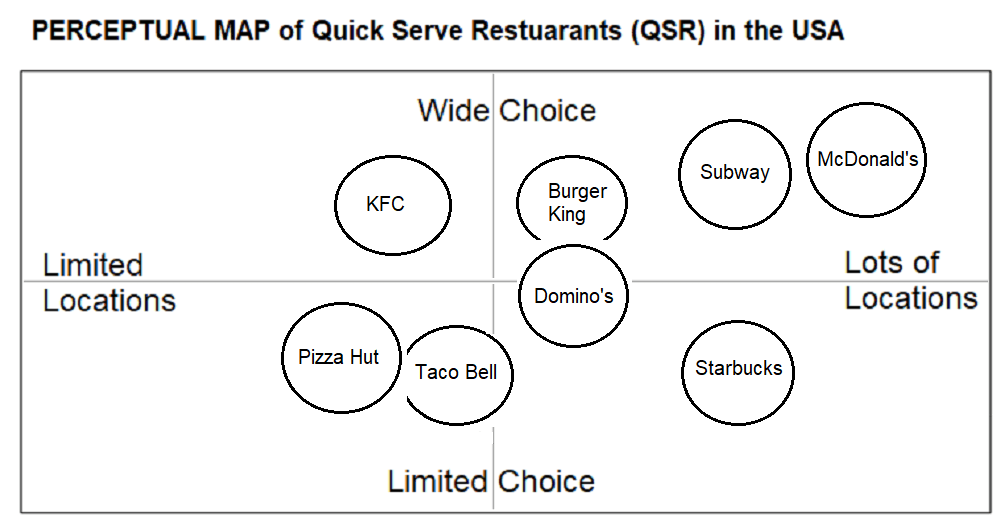
A perceptual map (P-map) is a tool used to illustrate the consumer’s perceptions of a product/ brand.
A perceptual map is a tool for determining the position of a brand in the marketplace, based on consumer perceptions of the brand and its competitors, using attributes that are important to consumers.
The various attributes can be: expensive/inexpensive brand, high/low price, premium/ budget price, high/low quality, etc.
Perceptual Maps are used to determine how various brands are perceived according to the key attributes that customers value. This is important because positioning is a two-way process by which organisations seek to impose attribute perceptions onto customers and customers assimilate those perceptions, modify them or reject them entirely (Baines, Fill and Rosengren, 2017).
A Perceptual Map is also called as a positioning map (P-map). You can read more on positioning in marketing.
When designing a perceptual map for any business, its important to remember the following:
- Why do you think they are in that position against their competitors?
- Identify the most important variables for their target market and use these on the axis of your PERCEPTUAL map.
- Explain WHY these variables are important to the target market.
Positioning of Starbucks in India
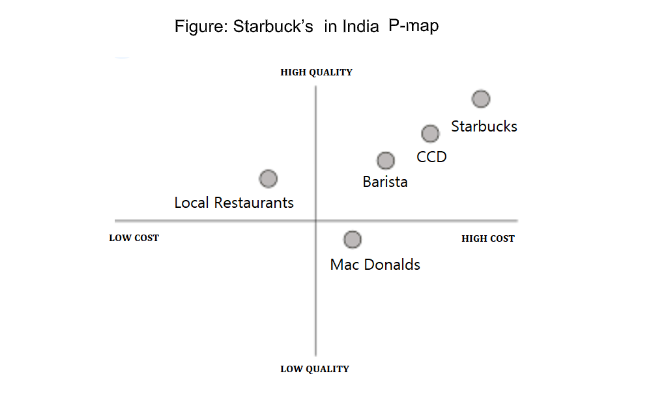
In India, Starbucks faces competition other coffee chains, both local as well as international, such as Cafe Coffee Day, Barista, Costa Coffee, and a few others. In India, compared to its competitors, Starbucks positions itself as a premium coffee brand by providing high-quality coffee experience in its outlets. Its focus is on offering high-quality products, comfortable ambiance, and variety of food and beverage options.
The brand also uses its global brand image, its well-recognized logo, and slogans, to further create a sense of exclusivity and sophistication.

Leave a Reply