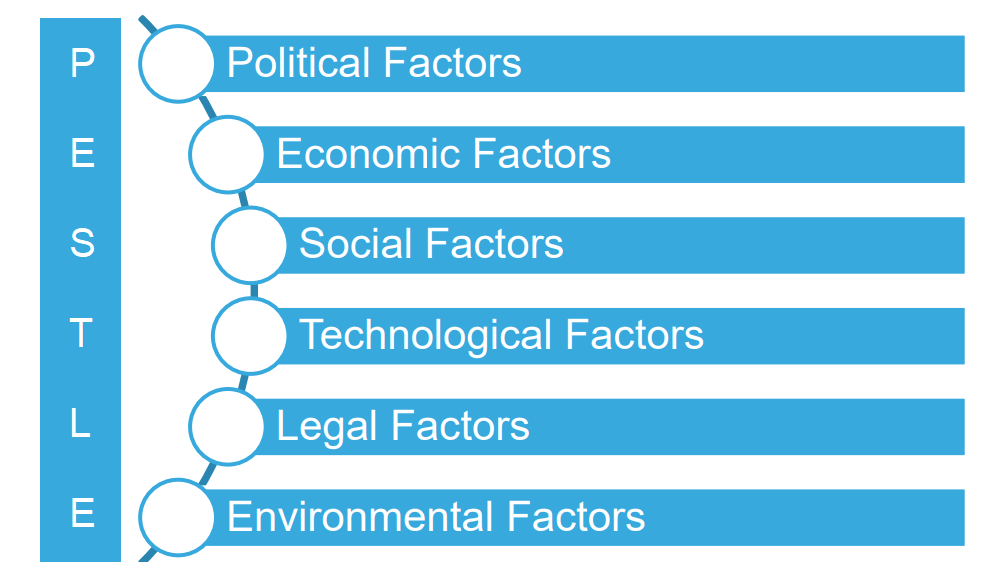
Economic environment refers to the external economic factors that can influence businesses as well as consumer behavior, and in turn impact the performance of a business. Economic environment factors are further categorized as macroeconomic factors and microeconomic factors.
It is important for managers to appreciate the importance of the economic analysis of foreign markets, to identify the major dimensions of international economic analysis, to compare and contrast the economic indicators of countries, to profile the characteristics of the types of economic systems, to discuss the idea of economic freedom, and to profile the idea, drivers, and constraints of economic transition.
Introduction
Some of the factors to consider include Buying power affected by income, debt and credit usage. Interconnected global economy: the impact of recession or recovery in one country or region on consumers and businesses purchases in another country or region. Home country’s economic growth rate vs. other countries’ growth rates.
- Economic stability
- Degree of economic freedom
- Economic development (national production: GNP, GDP, GDP per capita)
- Stage of market development (worldbank)
- Income and wealth (to determine people’s purchasing power) (income growth rate, personal or household disposable income, purchasing power parity (PPP); income distribution)
- Infrastructure: transportation, education, health care
- Economic integration (free trade areas)
Economic factors include: Business cycles. Interest rates. Personal disposable income. Exchange rates. Unemployment rates. Differential growth rates around the world.
Economic cycles: economic growth rates have an underlying tendency to rise and fall in regular cycles. Certain industries are particularly vulnerable to economic cycles, such as Discretionary spend industries (e.g. housing, cars), High fixed cost industries (e.g. airlines, hotels).
Here are some more factors:
Wage inflation – annual wage increases in a particular sector will depend on the supply of labour in that sector. Where there is scarcity of supply, wages usually increases (e.g. doctor).
Price inflation – how much consumers pay for goods and services is dependent on the rate of supply of those goods and services.
Gross domestic product per capita – combined output of goods and services in a particular nation determines relative wealth between countries when comparisons are calculated per member of the population.
Income, sales and corporation taxes – typically operating in all countries around the world usually at different levels, substantially affecting how we market goods and services.
Exchange rates – the relative value of a currency vis-à-vis another currency impacts on businesses operating in foreign markets or holding financial reserves in other currencies.
Export quota controls and duties – there are often restrictions placed on the amounts (quotas) of goods (and services) that any particular firm or industry can import into a country, depending on to which trading bloc or country a company or firm is exporting.
Related: The PESTLE analysis tool explained
New Realities in the Economic Environment
Emergence of a ‘Global Economy’
Economic integration has been growing over the years. We can observe the emergence of global markets and, in line with this, global competition. The integration of markets is one key characteristic of a global economy. Integration is striking in the European Union (EU) and the North American Free Trade Area (NAFTA).
Emerging Markets (BRICS)
Many companies engage in global marketing in an effort to reach new customers outside their home countries. They do so to increase sales, profits, and market share. Emerging Markets are the new Battleground for MNCs. Emerging Markets Give Rise to New Competitors – EMNEs. The BRICS nations are particular dynamic and represent important opportunities.
Technology, Robotics, E-Commerce
The growth of e-commerce, the personal computer and the advent of digital technologies diminishes the importance of national boundaries and forces companies to re-evaluate their business model. We live in a transnational cyber world that functions 24/7.
Analysing / Classifying Economies
Economies are usually analysed/classifyied based on Economic System, Degree of Economic Freedom and Stage of Market Development.
Classifying Economies by ‘Economic Freedom’
Economic freedom is the degree to which members of a society can undertake economic actions. The Washington D.C.-based Heritage Foundation rates and compares 180 countries based on their degree of freedom.
Key economic variables: Trade policy, Taxation policy, Government consumption of economic output, Monetary policy, Capital flows and foreign investment, Banking policy, Wage and price controls, Property rights, Regulations, Black markets.
Classifying Economies by ‘Stages of Market Development’
The World Bank has developed a four category classification system (High-income, Upper-middle-income, Lower-middle-income, Low-income) that uses per capita Gross National Income (GNI, a nation’s income per person per year) as a base:
Marketing Implications
The stages of economic development can serve as a guide to marketers in evaluating market opportunities; that is in global market segmentation and target marketing.
Product saturation levels, or % of potential byers or households that own a particular product, for example, often depend on income levels. Product saturation levels for many products are low in emerging markets.
Example: There are fewer credit card machines in India considering its population, compared to countries like US, China and Europe.
Related: Bottom of the Pyramid Markets.
More Factors
All countries differ in terms of: levels of economic development, economic performance, economic potential.
A firm’s managers must understand the economic environments of those countries in which it operates, as well as those of countries in which it does not, in order to predict how trends and events the world over will likely affect firm performance.
The key economic forces include the general economic framework of a country, its degree of economic stability, the existence and role of capital markets, the presence of factor endowments, its market size and the existence of economic infrastructure.
Economic Environment (Domestic and Foreign Economic Factors) includes “economic structures” (trade relations) and “type of economy” of the home and host country that may affect the global organization. It is important that a global marketers analyse their own ‘home’ economic environment as well as that of the economic environments of the markets in they wish to conduct business internationally.
The Factor Conditions refer to a nation’s inputs into the production process, such as human, physical, knowledge, and capital resources, and infrastructure.
However, it is difficult to specify a a definitive set of economic indicators that precisely assess the performance and potential of a nation’s economy, but it is also difficult to understand the systematic relationship of one variable to another.
Gross national income (GNI) refers to the market value of all final goods and services produced by a country’s domestically-owned firms in a given year.
Purchasing power parity (PPP) refers to the number of units of a country’s currency required to buy the same amount of goods and services in the domestic market that one unit of income would buy in another country. PPP is estimated by calculating the value of a universal “basket of goods” that can be purchased with one unit of a country’s currency.
The Human Development Index is designed to capture long-term progress rather than short-term changes. It measures longevity, knowledge (adult literacy rates), and standards of living. It combines indicators of real purchasing power, education, and health. The human development index provides a more comprehensive measure that incorporates both economic and social variables.
Other (second-order) indicators of economic development and potential include Inflation, Unemployment rate, Debt (internal as well as external), Income distribution, Poverty rate, Balance of payments.
The Consumer Price Index (CIP) measures the average change in consumer prices over time in a fixed market basket of goods and services; the misery index represents the sum of a country’s inflation and unemployment rates.
The Balance of Payments (BOP), officially known as the Statement of International Transactions, reports the total of all money flowing into a country less all money flowing out of that country to any other country during a given period of time records a country’s international transactions amongst companies, governments, and/or individuals during a given period of time.
Key Components of The Balance of Payments include:
- Current Account: Value of merchandise exports and imports. Value of services exports and imports. Value of income receipts and payments. Net value of unilateral transfers
- Capital Account: Value of capital inflows and outflows. Value of financial inflows and outflows. Net change in official reserve assets
Surpluses and Deficits: A trade surplus indicates that the value of exports exceeds the value of imports. A trade deficit indicates that the value of imports exceeds the value of exports.
Trends in balance of payments data can reveal important strategic implications with respect to a country’s economic environment and potential economic policies.
Types of Economic Systems
An economic system can be defined as the set of structures and processes that guides the allocation of scarce resources and shapes the conduct of business activities in a nation.
Various types of Economic Systems:
- Market Economy: a free-market (capitalistic) economy built upon the private ownership and control of the factors of production
- Command Economy: a centrally-planned economy built upon government ownership and control of the factors of production
- Mixed Economy: an economy in which economic decisions are largely market-driven and ownership is largely private, but significant government intervention is still evident
The Economic Freedom Index approximates the extent to which a government intervenes in the areas of free choice, free enterprise, and market-driven prices for reasons that go beyond basic national needs. It classifies countries as: free, mostly free, mostly unfree, repressed.
The Determining Factors of The Economic Freedom Index include: Trade policy. The fiscal burden of the government. The extent and nature of government intervention. Monetary policy. Capital flows and investment Banking and financial activities. Wage and price levels. Property rights. Other government regulation Informal market activities .
The shift from a command or mixed economy to a freer market economy largely depends on a government’s ability to: dismantle features such as central planning, create features such as consumer sovereignty. The success of the transition process depends upon the government’s ability to liberalize economic activity, to reform business practices, and to establish legal and institutional frameworks.
The various policies that shape the Economic Transition Process include:
- Privatization: the sale and/or legal transfer of government-owned resources to private individuals and/or entities
- Deregulation: the relaxation or removal of restrictions on the free operation of markets and business practices
- Property rights: the protection of real (tangible) and intellectual (intangible) property
- Fiscal and monetary reform: the reliance upon market-oriented instruments to achieve macroeconomic stabilization, the setting of strict budgetary limits, and the use of market-based policies to manage the money supply
- Antitrust legislation: laws designed to maintain and promote market competition, i.e., to prohibit the anticompetitive behavior of monopolies
To sum it up, the benefits of conducting business in a given country are directly influenced by the size of the market, the openness, stability, growth potential of the economy, as well as the wealth of consumers. The power of economic analysis is a function to identify the best possible indicators and then to understand how they work separately as well as together. The type of economic system prevalent in a country is a strong predictor of the nation’s current economic performance as well as its future economic prospects.

Leave a Reply