Grammar is called व्याकरण (pronounced as Vyakaran) in Hindi. List of topics within Hindi Grammar (Vyakaran)
Hindi vs English Grammar
If you speak English, then you would have been accustomed to the English format of subject-verb-object in grammar. But in Hindi grammar, the format that is followed is subject-object-verb which simply means that the verbs are commonly found at the end of the sentence instead of being placed before the object.
Hindi also employs the method of split ergativity wherein the verbs coincide with the object in the sentence instead of having more connection with the subject.
The article ‘the’ is not utilized in Hindi’ instead the numeral one implies an indefinite singular article which does the job of ‘a/an’.
Postpositions exist in Hindi grammar but are usually placed after the nouns.
There are also notable differences on the use of different tenses, gender, and interrogatives. Conventional punctuation are utilized like question marks, commas, and exclamation points but a vertical line is used instead of periods to signify the end of a sentence.
भाषा के भेद
हम अपनी बात को बोलकर, लिखकर या संकेतों के द्वारा दुसरे के सामने प्रकट करते हैं। उसे भाषा कहते हैं।
भाषा के तीन भेद होते हैं |
- १) मौखिक भाषा
- २) लिखित भाषा
- ३) सांकेतिक भाषा
मौखिक भाषा – जब हम अपनी कथन को दूसरों के सामने बोलकर प्रकट करते हैं उसे मौखिक भाषा कहते हैं। जैसे टेलीविज़न, भाषण, वार्तालाप, नाटक, रेडिय।
लिखित भाषा – जब हम आपने विचारों को दूसरों के सामने लिखकर प्रकट करते हैं। उसे लिखित भाषा कहते हैं । जैसे पत्र लिखना, समाचार पत्र।
सांकेतिक भाषा – जब हम आपने विचारों को इशारे या संकेतों के माध्यम से दूसरों के सामने प्रकट करते हैं उसे सांकेतिक भाषा कहते हैं। उदहारण: जो बोलते नहीं हैं वह इस भाषा का प्रयोग कर सकते हैं।
Here are the various Hindi Grammar Topics.
वर्ण / वर्णमाला (Varnamala)
वर्ण / वर्णमाला (Varnamala): Swar (vowels) and Vyanjan (consonants) in Hindi Vyakaran
Varna can be said to be the alphabets of Hindi language. In Hindi language, there are total 44 alphabets.
All the Varna’s together is known as Varnamala.

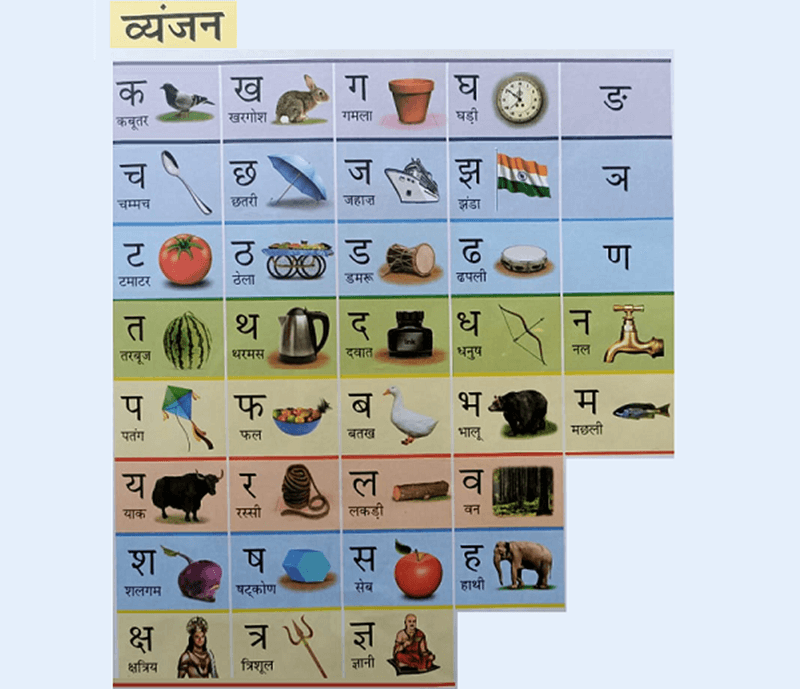
Varnamala in Hindi is made of Swar (11 of them) and Vyanjan (33 of them).
भाषा की सबसे छोटी इकाई ‘वर्ण’ कहलाती है। हिनी भाषा में मूल रूप से चवालीस (44) वर्ण है। वर्णों का व्यवस्थित समूह ‘वर्णमाला’ कहलाता है।
1. Swar in Hindi can be said to be similar to Vowels
2. Vyanjan can be said to be similar to consonants
स्वर – जिन वर्णों का उच्चारण बिना किसी अन्य वर्ण की सहायता से किया जाता है उन्हें स्वर कहते हैं। हिंदी भाषा में ग्यारह (11) स्वर होते हैं।
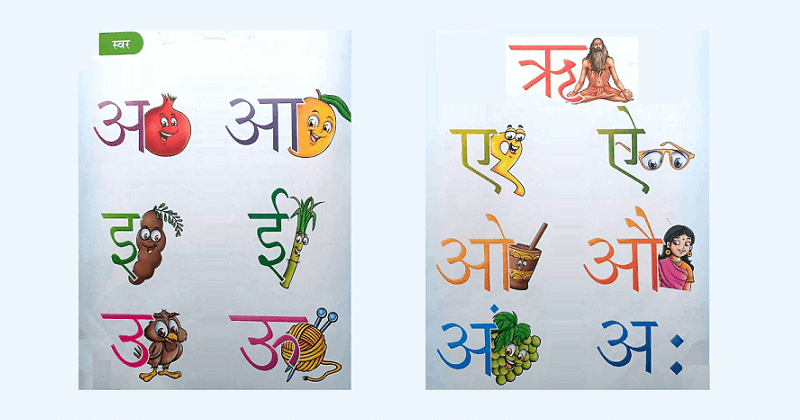
व्यंजन – जिन वर्णों का उच्चारण स्वरों की सहायता से किया जाता हैं, उन्हें व्यंजन कहते हैं। हिंदी भाषा में तैंतीस (33) व्यंजन होते हैं।
मात्रा (Matras)
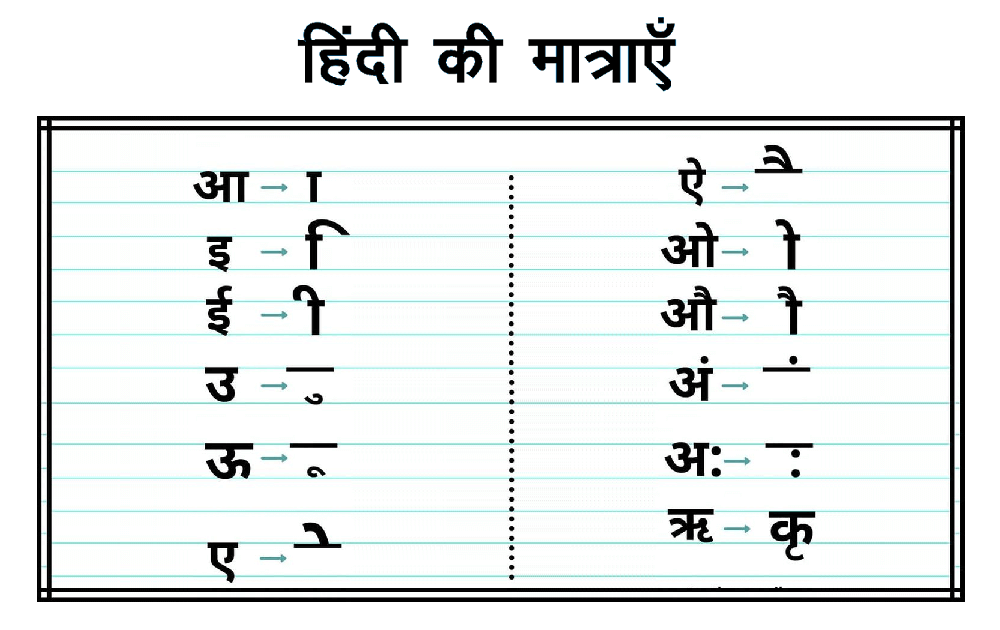
Hindi matras are also known as vowel signs. Every letter (swar) in Hindi has its associated sound and that can be altered using the various matras.
If you live in India, you will have to learn to read and write in Hindi. Hindi and other regional languages (such as Marathi) are introduced at an early age in schools.
While most parents are comfortable teaching other languages to their kids, Hindi and Marathi is challenging for many, especially the matras.
An important part of learning Hindi (and Marathi) are the various matras.
Hindi matras are also known as vowel signs. Every Hindi vowel has its own different signs. Definition of Hindi Matra: Consonents (व्यंजन) ke bad vowels(स्वरों) ke badle hue swarup (nature) ko matra kahte hai.
Examples of how matras are used
बिना मात्रा वाले शब्द (Words without any matras)
घर, कप, फल, बतख, कमल, कलश, अमन, रमन, मगर, कलम, मटर, भरत, सड़क, चरण, भवन, गगन, अजगर, अदरक, उपवन, नटखट, चमचम, बरगद, कटहल
आ की मात्रा वाले शब्द (words with the matra ‘aa’)
कार, गाय, राजा, कान, खाना, नाक, माला, अनार, चावल, मकान, पालक, टमाटर, पाठशाला, छाता, ताला, हलवा, बादाम
ि की मात्रा वाले शब्द (words with the matra ‘e’ pronounced as in the word kick)
हिरन, किताब, चिड़िया, सितार, तकिया, मालिश, पहिया, नारियल, किशमिश, टिकट
ी की मात्रा वाले शब्द (words with the matra ‘ee’ pronounced as in the word See)
लीची, हाथी, बकरी, चाची, गीता, चाबी, चीता, डाली, मामी, मछली, पपीता
ु की मात्रा वाले शब्द (words with the matra ‘u’ pronounced as in the word pull)
पुल, गुलाब, कछुआ, धुन, चुन, सुमन, जामुन, साबुन, बुलबुल
ू की मात्रा वाले शब्द (words with the matra ‘oo’ pronounced as in the word soon)
चूहा, सूरज, भालू, मीनू, झूला, अमरुद, रूपा
ए ( े ) की मात्रा वाले शब्द (words with the matra ‘a’ pronounced as in the word cake)
शेर, सेब, पेड़, खेल, मेल, रेल, तेल, चलने, घूमने, खेलने, नेवला, रेलगाड़ी
ऐ ( ै ) की मात्रा वाले शब्द (words with the matra ‘aye’)
थैला, बैल, सैनिक, कैसा, पैर, पैसा, भैया, पैदल, मैदान, मैया
ओ (ो ) की मात्रा वाले शब्द (words with the matra ‘o’ pronounced as in the word more)
मोर, ढोलक, टोकरी, शोर, चोर, खोट, गोटी, रोटी, समोसा, मोहन, अखरोट
औ (ौ ) की मात्रा वाले शब्द (words with the matra ‘ove’ pronounced as in the word love)
कौआ, लौकी, खिलौना, चौका, मौक़ा, मौसी, दौड़ा, चौड़ा, हथौड़ा, तौलिया
Hindi matra chart
Here’s another nice chart that lists all the matras, how they sound and how to use them.
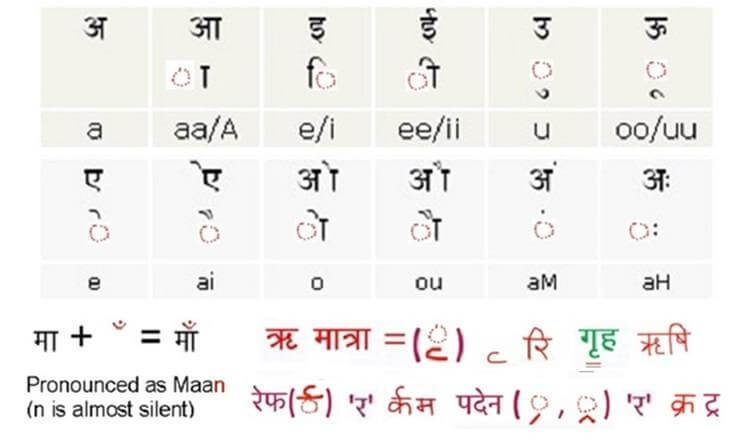
Of all the ‘matras’, the most confusing ones are the E ki matra and the O (U) ki Matra. When to use the small (chhoti) E or the big (badhi) E? Same for the O (U) matras.
Here are some examples for E ki matra (इ की मात्रा).
- Haathi (Elephant) has to be pronounced as (Haathee), so the E is the longer one (EEE). More examples ‘Cheenee’ (sugar), Geelee (wet), Didi – to be pronounced as deedee (elder sister), Diwali – to be pronounced as deewalee
- In Kitaab (Book), the Ki is short, so the smaller (choti) E has to be used. More examples
- Usually, the ‘E’ at the beginning of the word is smaller (choti), and the one at the end (and in the middle) is bigger (badhi)
Same goes for the O (U) ki matra (उ की मात्रा).
- Bhaloo (Bear), Suraj to be pronounced as Sooraj, Doodh (milk), Joota (shoes), Chakuu (Knife), Rajput to be pronounced as Rajpoot. In these examples, the bigger-badhi O (U) has to be used.
- Sukh (Happiness), Gulaab (rose), Luhaar (Ironsmith), Bulbul (bird), Gujarat. In these examples, the smaller-choti O (U) is used.
- Usually, the ‘O (U)’ at the beginning of the word is smaller (choti), and the one at the end (and in the middle) is bigger (badhi)
Ki (कि) vs Kee (की): Understand the Difference
“कि और की” में क्या अंतर है और इन शब्दों का प्रयोग कैसे करना चाहिए।
“कि” में छोटी इ की मात्रा लगता हैं और “की” में बड़ी ई की मात्रा का लगता है। अक्सर लोग इन शब्दों को एक दुसरे की जगह पर प्रयोग करते हैं। तो समझते हैं इनका सही अर्थ और इन्हे कैसे प्रओग करना चाहिए।
Students are often confused about how to use ‘ki’ and ‘kee’. Here’s how to use them correctly.
कि (Ki) vs की (Kee)
की (Kee)
यह शब्द एक संज्ञा (Noun) या सर्वनाम (Pronoun) को दुसरे संज्ञा शब्द से जोड़ता हैं और उनमें सम्बन्ध स्थापित करता हैं।
कि (Ki)
इस शब्द का प्रयोग दो वाक्यों को जोड़ना में किया जाता हैं।
Examples
की (Kee) के उदहारण (examples)
मेरे घर की चाबी खो गयी हैं। (I have lost the keys of my house)
उसने बैल की जोड़ी खरीदी। (He bought a pair of bulls)
वह घर की देखभाल करता हैं। (He takes care of the house)
कि (Ki) के उदहारण (examples)
उसे पता था कि वह समय पर पहुँच जायेगा। (He knew that he would reach on time)
परिणाम यह हुआ कि वह ऊपर से गिर पड़ा। (The result was that he fell down)
अब वह समझ गया कि मेहनत करना जरूरी हैं। (Now he understood that he had to work hard)
संज्ञा / Sangya (Noun)
संज्ञा (Sangya) means noun in Hindi. It denotes name, place, animal or thing.
किसी प्राणी, वस्तु, स्थान, और भाव के नाम का बोध कराने वाले शब्द को संज्ञा कहते हैं। हर चीज़ की पहचान उसके नाम से होती हैं और नाम को ही संज्ञा कहते हैं।
- व्यक्तियों के नाम – जूही, माता-पीता
- पशु पक्षियों के नाम – चीता, शेर, चिड़ियाँ
- स्थानों के नाम – दिल्ली, क़ुतुबमीनार, लालकिला, चिड़ियाघर
- वस्तुओं के नाम – गुड़ियाँ, फ्रॉक, खिलौना
- भावों के नाम – सुंदरता, ख़ुशी
संज्ञा के तीन भेद होते हैं –
1. व्यक्तिवाचक संज्ञा
विशेष व्यक्ति, वस्तु, स्थान, आदि का नाम; जैसे – सचिन तेंदुलकर, भारत, दिल्ली।
2. जातिवाचक संज्ञा
एक ही जाति या वर्ग का नाम; जैसे – देश, शहर, क्रिकेटर|
3. भाववाचक संज्ञा
किसी भाव, गुण-दोष, अवस्था आदि को बोध ; जैसे – हरियाली, दौड़, ख़ुशी।
सर्वनाम – Sarvnaam (Pronouns)
सर्वनाम (pronounced as “Sarv naam”) is the Pronoun in Hindi Vyakaran.
संज्ञा की जगह पर होने वाले शब्द को सर्वनाम कहते हैं ।
उदहारण – मैं, मुझे, तुम, हम, आप, वह, वे (इत्यादि)
सर्वनाम शब्दों का वाक्यों में प्रयोग
- मैं – मैं सो रहा हु।
- मुझे – मुझे स्कूल जाना हैं।
- तुम – तुम उस कोने में छुप जाओ।
- हम – हम थोड़ी देर में पहुँच रहे है।
- आप – आप अंदर आइये।
- वह – वह मेरा लड़का है।
- वे – वे विदेश से यहाँ घूमने आये है।
सर्वनाम शब्दों के भिन्न भिन्न रूप।
- मैं मैंने मेरा मुझे
- तुम तुमने तुम्हारा तुम्हे
- हम हमने हमारा हमें
- उस उसने उसका उसे
सर्वनाम के छह भेद होते हैं –
- पुरुषवाचक (Personal pronoun)
- निश्चयवाचक (Definite Pronoun)
- अनिश्चयवाचक (Indefinite pronoun)
- प्रश्नवाचक (Interrogative Pronoun)
- संबंधवाचक (Relative Pronoun)
- निजवाचक (Reflexive Pronoun)
क्रिया – Kriya (Verb)
क्रिया refers to the ‘verb’ in Hindi.
क्रिया का अर्थ हैं काम। काम का करना या होना क्रिया कहलाता हैं।
वे शब्द जिनसे किसी काम के करने या होने जा पता चलता हैं, उसे क्रिया कहते हैं।
कुछ काम अपने आप हो जाता हैं और कुछ काम किये जाते हैं।
जैसे – लड़का पढ़ रहा हैं (किया जाने वाला काम)
नदी का पानी बह रहा हैं (अपने आप होने वाला काम)
विशेषण – Visheshan (Adjective)
विशेषण is basically the ‘adjective’ in Hindi Vyakaran/language.
जो शब्द संज्ञा और सर्वनाम की विशेषता बताते हैं, उन्हें विशेषण कहते हैं |
विशेषण जिन शब्दों की विशेषता बताते हैं, वे विशेष्य कहलाते हैं
जैसे – हाथी बलवान जानवर हैं।
यहाँ पर, बलवान’ शब्द विशेषण हैं क्यूंकि वह विशेषता बता रहा हैं। ‘हाथी’ शब्द विशेष्य हैं।
उचित विशेषण शब्द से वाक्यों को पूरा करो (Complete the sentences using appropriate adjectives)
१) परिश्रमी लोग सदा सफलता प्राप्त करते है। (परिश्रमी , आलसी, सुस्त)
२) गार्ड ने हरी झंडी दिखाकर गाडी को रवाना किया। (लाल, हरी, नीली)
३) हमारे देश का तिरंगा झंडा सदा ऊंचा रहे। (पंचरंगा, तिरंगा, एकरंगा)
लिंग (Ling): Gender
लिंग (pronounced as “ling”) talks about Gender in Hindi Vyakaran.
जिस शब्द से पुरुष या स्त्री जाती का बोध होता हैं, उसे लिंग कहते हैं।
लिंग के दो भेद होते हैं –
पुल्लिंग – पुरुष जाती का बोध कराने वाले शब्द पुल्लिंग कहलाते हैं।
जैसे (examples) – लड़का, आदमी, मोर, आदि (etc.)
स्त्रीलिंग – स्त्री जाती का बोध कराने वाले शब्द स्त्रीलिंग कहलाते हैं।
जैसे (examples) – लड़की, औरत, मोरनी, आदि (etc.)
वचन (Vachan) – (Singular / Plural)
वचन (vachan) in Hindi Vyakran basically explains the concept of Singular and Plural.
शब्द के जिस रूप से एक या अनेक होने का बोध होता है, उसे वचन कहते हैं। वचन से संख्या का बोध होता हैं।
वचन दो प्रकार के होते हैं एकवचन बहुवचन
एकवचन – जिस शब्द से उसके एक होने का पता चलता हैं, उसे एकवचन कहते हैं।
जैसे – चिड़िया आसमान में उड़ रही हैं।
बहुवचन – जिस शब्द से उसके एक से अधिक होने का पता चले, उसे बहुवचन कहते हैं।
जैसे – चिड़ियाँ आसमान में उड़ रही हैं।
Kal (काल) (Tense)
Kal (काल) refers to the Tense in the Hindi language.
जिस शब्द से किसी कार्य करने या होने के समय का पता चले, उसे ‘काल’ कहते है।
काल के तीन भेद होते है –
वर्तमान काल (present Tense) – कार्य जो इस समय पर हो रहा है।
जैसे, राम खेल रहा हैं।
भूतकाल (Past Tense) – कार्य जो हो चूका हैं, जो समय बीत चुका है।
जैसे, राम सुबह खेलने गया था ।
भविष्यत काल (Future Tense) – कार्य जो होने वाला हैं, जो समय आने वाला है।
जैसे, राम आज शाम को खेलने जायेगा ।
Paryayvachi (पर्यायवाची) Shabd
पर्वायवाची (paryayvaachi) शब्द basically means synonyms (Samaan arth Shabd).
सामान अर्थ वाले शांदों को पर्वायवाची शब्द कहते हैं। जैसे पृथ्वी के पर्वायवाची शब्द हैं धरती, धरा।
पर्याय का अर्थ होता है ‘समान’ और ‘वाची’ का मतलब होता हैं ‘बोले जाने वाले’। तो जिन शब्दों का अर्थ एक जैसा होता है, उन शब्दों को ‘पर्यायवाची शब्द’ कहते हैं।
पर्यायवाची शांदों को समानार्थक शब्द भी कहते है |
Examples
- इच्छा – कामना, आकांक्षा, मनोरथ
- नाव: नौका, जहाज
Vilom (विपरीतार्थक/विलोम)
Vilom shabds are Opposite words (Antonyms) in Hindi.
शब्द के उलटे या विपरीत शब्द को “विलोम” शब्द कहा जाता है।
Examples:
क्रूर (cruel or harsh): दयालु (kind), कोमल (tender)
आदि (beginning or first): अन्त (end), अंतिम (final), अखिर (last)
मुहावरे (Muhavare)
- हिंदी मुहावरे (Hindi Muhavare): Muhavare means “idioms”.
- हिंदी कहावतें (Hindi Kahawat): Kahawat means quotes/sayings”.
अपठित गद्यांश (Apathit Gadyaansh / Unseen Passages / Comprehension)
अपठित गद्यांश का अर्थ है “जो पढ़ा नहीं गया हो” ।
यह गद्यांश छात्र के पुस्तक में से नहीं लिया जाता है। यह किसी भी विषय से जुड़ा हुआ हो सकता है।
गद्यांश पढ़ने के बाद इससे सम्बन्धित प्रश्न छात्रों से पूछे जाते हैं। इससे छात्रों की पढ़ने और समझने की क्षमता बढ़ती है।
अपठित गद्यांश means “unseen passage”
Students are expected to read the passage and answer the questions that follows. It is similar to Comprehension.
Examples
अपठित गद्यांश – तितली। लालच करना बुरी बात है।
एक तितली थी। उस का नाम रानी था। रानी के पंख रंग-बिरंगी थे। लेकिन रानी लालची भी थी। उसके मित्र मोर और बकरी थे। वह दोनों रानी को समझाते थे की लालच मत किया करो। एक दिन रानी बाग में गयी। वह फूलों का रस पीने लगी। पहले उसने चमेली के फूल का रस पिया। उसका पेट भर गया। फिर भी वह न मानी। वह लाल गुलाब का रस पीने लगी। उसे रस मीठा लगा। अब उसने उड़ने चाहा, पर वह उड़ न सकी। उसके सुन्दर पंखा काटों में फस गए थे। उसे समझ आ गया था की लालच करना बुरी बात है।
प्र १ सही उत्तर पर निशान लगाओ।
प्र १) रानी तितली एक दिन कहा गयी थी ?
(बाग में, महल में, तालाब पर)
उत्तर: बाग में
प्र २) रानी तितली कैसी थी ?
(सयानी, लालची, शरारती)
उत्तर: लालची
प्र ३) रानी तितली ने पहले किस फूल का रस पिया ?
(कमल, गुलाब, चमेली)उत्तर: चमेली
प्र ४) रानी तितली के कौन मित्र थे ?
(शेर और चूहा, कबूतर और हंस, मोर और बकरी)
उत्तर: मोर और बकरी
प्र ५) रानी तितली के पंख किस में फस गए थे ?
(पेड़ में, काटों में, जाल में)
उत्तर: काटों में
प्र २ पाठ में छांट कर मिलते जुलते शब्द लिखो।
बिजली – तितली
रस – फस
प्र ३ लिंग बदलो
मोर – मोरनी
बकरी – बकरा
प्र ४ एक अनेक
तितली – तितलियाँ
परदा – परदे
प्र ५ वाक्य बनाओ
तितली – तितलियों के पंख रंग बिरंगी होते हैं।
लालची – लालच करने से बुरा होता है।

Leave a Reply