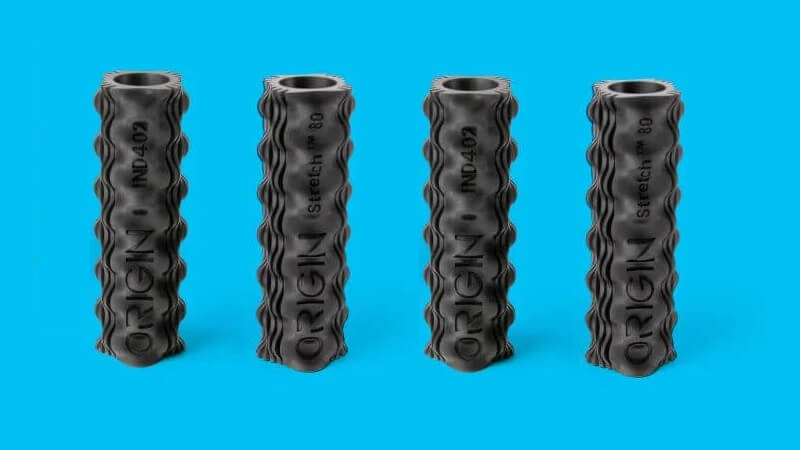
Additive manufacturing, commonly referred to as 3D printing, is a technique that involves the layer-by-layer deposition of material to produce three-dimensional objects. This process is based on a digital 3D model.
The procedure generally encompasses the subsequent fundamental stages:
The initial stage involves generating a digital 3D model of the intended object for printing. The process can be accomplished through the utilisation of computer-aided design (CAD) software or by means of scanning a pre-existing object utilising a 3D scanner.
The process of setting up the 3D model for printing involves a series of steps subsequent to its creation. The process entails partitioning the three-dimensional model into slender sections, which will serve as the foundation for the printer to construct the entity
.The process of material selection for 3D printing involves considering a diverse range of options such as plastics, metals, ceramics, and edible substances. The selection of the material is contingent upon the particular specifications of the object undergoing the printing process.
The process of printing an object involves the utilisation of a digital 3D model and sliced layers, which are sequentially deposited by the 3D printer to construct the object from the bottom up.
Post-processing procedures may be necessary after the printing of an object, which could involve the elimination of support structures, sanding, or painting.
Examples of 3D printed structures
There exists a plethora of instances of three-dimensional printed constructions within diverse sectors:3D Printed car parts: The utilisation of 3D Printing technology in the automotive industry has enabled the production of car parts and components. This facilitates expedited prototyping, increased opportunities for customization, and decreased expenses. Porsche has recently unveiled a novel concept for sports car seats, which utilises modular design and 3D printing technology.
3D Printed House: The House 1.0, a 3D printed concrete dwelling, was developed in Europe through a partnership between 3DCP Group, COBOD, and Saga Space Architects, utilising modular 3D building printer technology. The structure was constructed with the aim of minimising costs while ensuring the provision of essential amenities, including a living space, an unpartitioned kitchen, a sleeping quarter, and a washroom.
Medical Industry: An area significance pertains to the utilisation of 3D printing technology in the production of prosthetic limbs and body parts. The medical industry has experienced a notable influence from 3D printing, ranging from the production of tailored prosthetic legs for marathon runners to the creation of a human heart model that can aid medical practitioners.
3D Printed Food: 3D printing technology enables production of personalised food items. All of these commodities have the potential to be manufactured in diverse configurations and dimensions and can be tailored to accommodate specific dietary requirements or inclinations. Liz and Kyle von Hasseln, a married couple, utilised their 3D printer for fabricating sugar-based creations.
3D printing technology in the construction industry
The utilisation of 3D printing technology in the construction industry has the potential to bring about a revolutionary transformation, it will greatly enhance speed and cost efficiency in constructing buildings. The current construction methods are inefficient and costly due to excessive labour and time requirements, resulting in expensive housing. The utilisation of 3D printing technology is automated, requiring minimal labour and ultimately reducing construction costs while expediting the process.
The cutting-edge 3D printing technology allows for unparalleled customization and design flexibility, enabling creation of bespoke buildings that cater to the unique needs of residents.
Utilising 3D printing technology enables the incorporation of sustainable building materials, including recycled plastics, thereby mitigating the ecological footprint of the construction industry.
In general, the procedure of fabricating home through 3D printing encompasses the development of a virtual blueprint of the edifice by utilising computer-aided design (CAD) software. Subsequently, the digital representation is transferred to a 3D printing device, which employs a specialised nozzle to systematically dispense layers of material in an accurate configuration, thereby constructing the framework in a stepwise manner.

Leave a Reply