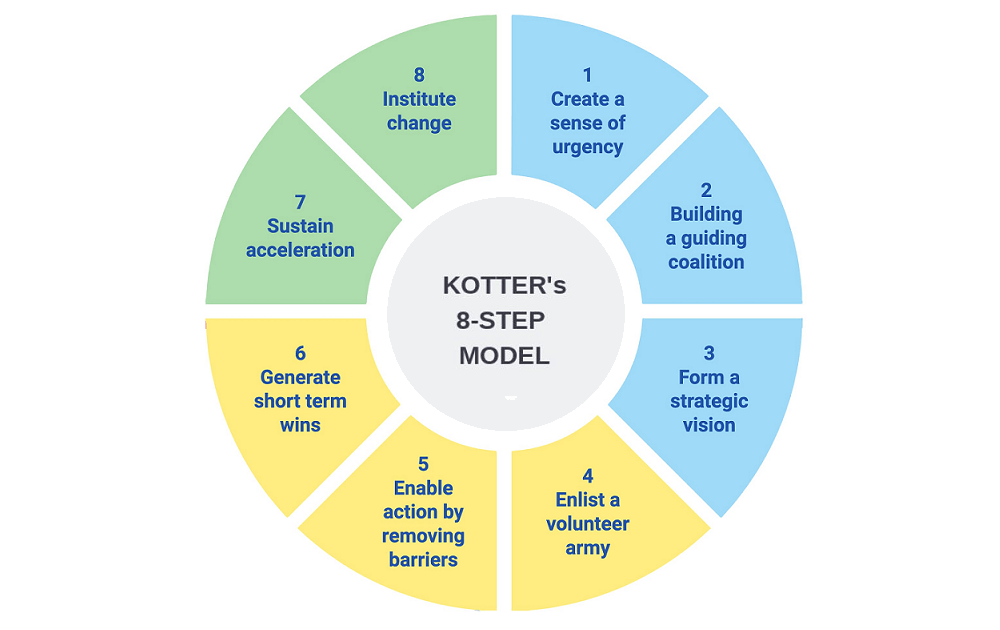
Kotter’s 8-step change model is a change management model that lays down the process for organizations to efficiently implement a new change initiative.
Introduction to Kotter’s Change Model
Dr. John Kotter had first introduced the model in his book ‘Leading Change’ (1996); the model was then updated and published in the book ‘Accelerate’ (in 2014).
Organisational change is inevitable and businesses have to adopt change to grow and to keep one step ahead of competition. There are several change models that suggest how organisations can adopt change. One of the more frequently used models is the one proposed by Kotter (Kotter and Cohen, 2012).
Kotter proposed an eight-step model that will help leaders to create the right environment to influence change, and to develop support that will help overcome barriers and make the change happen.
It is extremely important to implement the right structures that will help facilitate the change and to avoid unintended results.
The eight steps change model of Kotter:
Create a Sense of Urgency
It is human nature to resist change, so it is important to create a sense of urgency in to initiate a change. For this, the leadership team must explain the reasons as well as the benefits of the change, and get the buy-in of the majority.
Form a Guiding Coalition
Create a coalition team with key people from various functions, including managers and supervisors, that will be the support system for the change.
Create a Strategic Vision
Document the vision for the change. A change management plan with project milestones and deliverables will help people at all hierarchical levels to understand what the change encompasses.
Initiate Change Communication
Communicate the change so that it is understood well and supported. The firm must communicate the vision and the change implementation plan, and change team must address the concerns of the employees.
Remove Barriers to Change
In this step, the firm needs to identify the barriers (obstacles) to the change (it could be culture, resources, select people) and use the available resources to break those barriers without affecting the other business areas.
Generate Short-Term Wins
To keep the momentum going and to keep motivation levels high throughout the change journey, it is important to achieve short-term wins and celebrate them using innovative reward systems. This will help the change plan be on track and also motivate new employees to adopt the change.
Build on the Change
A change initiative can fail if the change team becomes complacent, especially towards the end of the project. Hence it is important to keep setting goals and looking for ways to improve in order to sustain the change for long and to reap long-term benefits.
Incorporate Changes in the Org Culture
For the change to be fully adopted, it must be deeply rooted in the culture and the processes of the organization. This requires continuous employee training methods and process improvements. By stopping too soon, the firm risks going back to older practices.
References
Kotter, J.P. and Cohen, D.S., 2012. The heart of change: Real-life stories of how people change their organizations. Harvard Business Press.

Leave a Reply