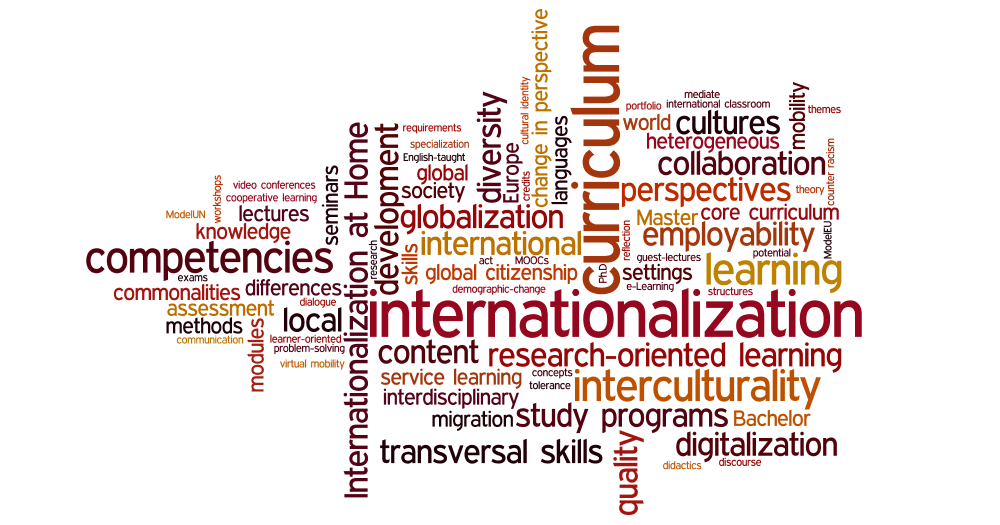
International marketing refers to the activities related to the sale of goods and services of one country in other countries.
What is International Marketing?
While international trade is about commerce between countries, international marketing is about promotion of products and services to the international market.
International marketing involves creating marketing strategies and products to fit the local needs in different countries.
A global marketing strategy, on the other hand, involves the creation of a single marketing strategy for a product, company or service for the entire global market.
- International businesses aspire to expand, broaden market share, seek opportunities to develop the brand through shared knowledge, and develop a global audience.
- International businesses create employment in other countries, partner with other businesses along their supply chain, and help create wealth.
- However, there is an expectation that international businesses are sustainable and not just profitable. International businesses must also take responsibility and consider their impact on society, the environment and the economy.
Drivers of International Marketing
Drivers are:
- Shaken confidence of businesses and consumers due to the COVID-19 pandemic
- Demography and imbalanced population growth
- Increase in personal wealth
- Rise of demand for transnational products and services
- Consolidation through M&As, acquisitions and alliances and global standardization
Theories of internationalization
Definition of internationalization: The method of adopting an organization’s operations to foreign environments.
Various Theories of internationalization: Economic model, The Uppsala model, Network or relationship model, Born global model.
Different levels of international marketing
- Domestic marketing
- International marketing
- Global marketing
Related: Factors influencing international markets: the PESTLE model
Domestic Marketing Strategy
Marketing that is aimed at a single market, the firm’s domestic market, is known as ‘Single Country’ or ‘Domestic’ marketing.
The firm faces only one set of competitive, and economic market issues, and one national customer (that is potentially) segmented into different subgroups.
Dual-Country or ‘Export’ Marketing Strategy
Export Marketing covers marketing activities that are involved when a firm sells its product outside the domestic market and when products are physically shipped from one country to another.
Focus is to find markets which have needs similar to those in the domestic market.
The marketing environment may be different and some adjustments may have to be made to the marketing mix elements.
Planning, implementation and control of the marketing mix are based in the exporting organization.
International Marketing Strategy
A company that practices international marketing goes beyond exporting and becomes much more directly involved in the local marketing environment within a given country.
The firm is likely to have own subsidiaries abroad and will participate in and develop entire marketing strategies for foreign markets.
Managers need to decide how to adjust an entire marketing strategy, including how they sell, advertise, and distribute their products in order to meet the demand of the new market (marketing mix).
Understanding different cultural, economic, political and environments becomes increasingly necessary for success.
Related: Global Marketing Strategy
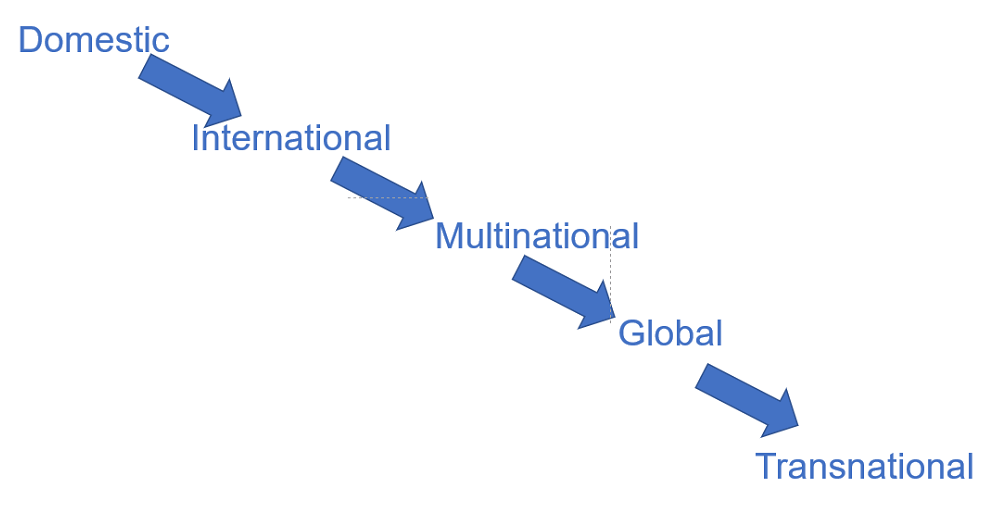
International Marketing grew with the Expansions of MNCs
As MNCs progressed in their internationalization, organizations increasingly recognized the importance of country-to-to country differences in their international marketing planning decisions leading to a maximum of localization and to a large variety of marketing strategies.
So, international marketing can be viewed as “a collection of more or less coordinated domestic marketings” (Perry 1999, 45)
The traditional international strategies of MNC’s however failed to take advantage of the global reach of these firms. It failed to take advantage of their global size in negotiating with suppliers and distributors, failed to apply lessons learned in domestic markets elsewhere, and failed to share good ideas in product development or promotions among subsidiaries.
Self-Reference Criterion and Ethnocentrism
The Self-Reference Criterion (SRC) is an unconscious reference to one’s own cultural values, experiences, and knowledge as a basis for decisions.
Ethnocentrism is the notion that people in one’s own company, culture, or country know best how to do things.
Both the SRC and ethnocentrism impede the ability to assess a foreign market in its true light.
International vs Domestic Marketing
Differences between international and domestic marketing.
- Culture: Often diverse and multicultural
- Markets: Widespread and sometimes fragmented
- Data: Difficult to obtain and often expensive
- Politics: Regimes vary in stability, political risk becomes an important variable
- Governments: Can be a strong influence in regulating importers and foreign business ventures
- Economies: Varying levels of development and unstable currencies
- Finance: Many differing finance systems and regulatory bodies
- Stakeholders: Commercial, home country and host country
- Business: Diverse rules, culturally influenced
- Control: Difficult to control and coordinate across markets
Best Practices in International Marketing
The control process and feedback
The three essential elements of the control process in the international environment:
- Setting standards relevant to corporate goals
- Measuring performance against standards
- Correcting deviations from the plan
Strategies of firms successfully competing in international markets:
- Have a clear international competitive focus
- Develop effective relationship strategies
- Have a well-managed organization with a culture of learning
To sum it up, while some companies may see international marketing as secondary to their domestic operations, many others now see international marketing as an important part of sales revenue generation.
In international marketing, self-reference criterion and ethnocentrism can limit the international marketer’s abilities to understand and adapt to the differences that are prevalent in foreign markets.

Leave a Reply