What is competitor analysis, how to undertake this activity, and tools used for competitive analysis in Business Management.
What is Competitive Analysis?
As part of the industry or sector analysis, it is important to examine the activity of competitors.
Competitive analysis is the process of identifying your competitors and evaluating the differences, strengths, weaknesses, market position, strategies adopted by these companies.
It is about assessing the nature and extent of competition in the organisation’s market place.
As part of competitive analysis, detailed information is needed on the following:
- Competitors: who are they, where are they, what are they doing, how well they are doing, their share of the market, their strengths & weaknesses.
- Customers: how they choose a company, e.g. price, brand name, Word of Mouth, adverts, location, reputation, benefits sought etc.
Competitor Analysis involves identifying competitors that are competing for similar customers or clients. Some of the competitive factors based on which you can compare include: Products, Price, Distribution, Promotions, Location, Range of products, Quality and Brand Image.
Some of these factors may be providing a strategic advantage to the competitor in the marketplace, so gaining an understanding of how the firm is positioned with regard to competitors based on these factors is important.
This exercise enables a business to understand its market position and to identify opportunities to gain competitive edge.
Analysing competitors can help marketers better understand market dynamics, anticipate what rivals will do, and create more practical marketing plans.
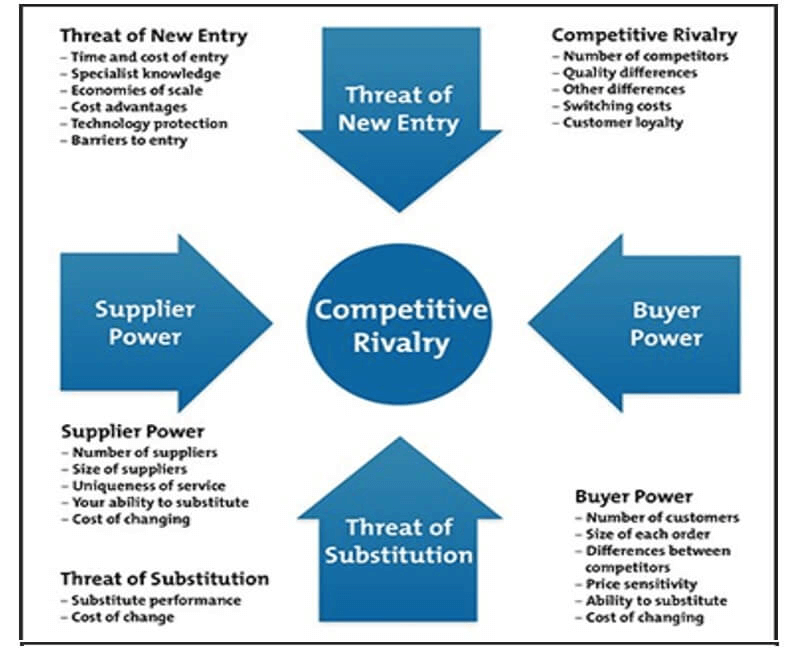
Frameworks such as Porter’s Five Forces is commonly used for competitive analysis in business management.
How to analysing competitors?
Start by identifying current competitors and possible sources of competition in the near future, to avoid being blindsided by a new entrant. Also look at trends in market share to get a sense of which competitors are becoming more powerful.
Read: Porter’s Five Forces of Competitive Position Analysis
Examples of Competitive Analysis
Startup selling athleisure clothing
Here’s a competitive analysis for a startup that plans to produce athleisure clothing for fitness enthusiasts in India.
Competitor: Tommy Hilfiger.
Products: Online 25- to 40-year-old men and women. Good quality clothing- leggings with internal pull-up hooks, jogger’s magnetic buttons, and easy open necklines on hoodies.
Strengths and Weaknesses: Well-known brand selling a range of sportswear. Strong brand presence via social media, digital marketing, online ads/ Influencers and models promoting. Thousands of employees. Worldwide distribution and a sizable web presence. Limited selection of gym options. No additional lines available for men or women in target market.
Competitor: Nike, Puma
Products: Shoes and Sportswear.
Strengths and Weaknesses: Excellent brand recognition. High quality products. Products are Premium.

Leave a Reply