McDonald’s Internal External Factors, SWOT, Porter’s 5 Forces, Strategy, Marketing Mix. About McDonald’s McDonald’s is a fast food chain which originated in America, and was founded by the McDonald brothers Richard and Maurice in California. On a revenue scale, it is the world’s largest restaurant chain, catering to over 69 million customers on a daily […]
Strategic Management
External Environment Analysis Models / Tools In Strategic Management
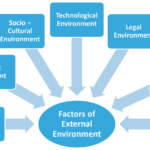
Learn more about the External Environment (Micro and Macro) and various models/tools available to carry out External Analysis. External Environment The external environment comprises of all external (outside) factors or influences that has could potentially impact the operation of a business. There are large external environmental forces affecting the industry in which a business operates. […]
Corporate Level Strategies
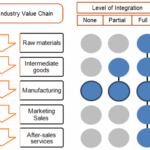
Corporate level strategies help to exercise the choice of direction that an organization adopts. What is Corporate Level Strategy? A corporate strategy refers to the actions that organizations undertake so that the company, or one or more of its business units, gain a competitive advantage which in turn let them carry out the value creation […]
Benchmarking strategy tool
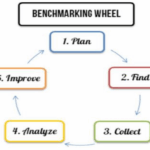
Benchmarking is a strategy tool used to compare the performance of the business processes and products with the best performances of other companies inside and outside the industry. Benchmarking is used as a way to understand how an organization compares with others. It is a means of understanding how an organisation compares with others – […]
Porter’s Value Chain
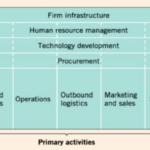
The value chain describes the categories of activities within an organisation which, together, create a product or service. Value Chain Analysis involves analyzing the entire value chain from raw materials to finished products. By doing so, it is possible to identify areas where costs can be reduced and efficiency can be improved. What is Value […]
VRIO Analysis
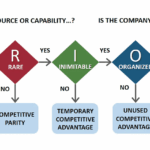
VRIO is am Internal analysis technique for doing Organizational Analysis. VRIO (acronym for value, rarity, imitability, and organization) framework helps understand the business elements that provides the business with a long-term competitive advantage. VRIO framework analyses an organisations internal resources, processes, and capabilities to see how it could be improved. Here is how VRIO is […]
The McKinsey 7S Framework
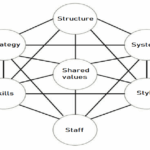
The model was developed by McKinsey & Company in the 1980s. Specifically, it was developed by Robert H. Waterman, Jr. and Tom Peters. Their research has shown that the success of an organization depends on a number of mutually supporting variables, besides strategy and structure. According to the 7-S framework, effective organizational change is driven […]
Using Pestle and Porter’s Five Forces Analysis Together
It is important to use the PESTLE and Five Forces Technique together for analysis as it helps to get a detailed picture of the situation that an organization faces. Both PESTLE / PEST and Porter’s Five Forces analysis provides an organization with more information about the external environment. However, using just one of the techniques […]
Competitive Advantage (Strategic Management): Various ways to achieve
Competitive advantage refers to conditions that allow a company or country to produce a good or service at equal value but at a lower price or in a more desirable fashion. These conditions allow the productive entity to generate more sales or superior margins compared to its market rivals. Gaining and sustaining Competitive Advantage is […]
The GE Planning Grid / GE 9 Cell
The General Electronic (GE) Matrix was developed by Mckinsey and Company Consultancy Group in the 1970s. Whereas BCG is limited to products, business units can be products, whole product lines, a service or even a brand. The GE matrix is plotted in a 3 x 3 grid i.e. it includes nine cells based on: long […]
The Boston Consulting Group (BCG) Matrix
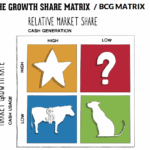
The BCG matrix framework by Boston Consulting Group evaluates the strategic position of the products in the portfolio of a business. While the Product Life Cycle is a great tool to determine how one or a group of products in the portfolio are doing, tools such as the BCG (Boston Consulting Group) Matrix are better […]
Bowman’s Strategic Clock
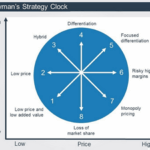
Bowman’s Strategy Clock presents various ways to position product/services and is a useful tool to understand how firms compete based on price and perceived value. Bowman’s strategic clock is another strategic tool that provides businesses with several options to position their products/services in the market. It suggests eight different ways to position product/services (BOWMAN & […]
SAF (SAF) Strategy Model
The Suitability, Acceptability and Feasibility (SAF) method helps in evaluating strategies; as per the framework, a strategy must meet three criteria for it to be successful – it must be suitable, acceptable and feasible (JOHNSON and SCHOLES, 1997). SAF Method Suitability: An assessment of the underlying rationale or logic of the potential strategy. Does the […]
Porter’s Generic Strategies
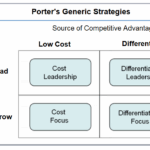
Porter’s generic strategies refers to strategies that companies can use to gain a competitive advantage in the market, such as Cost Leadership, Differentiation and Focus (Porter, 1985). Every business wants to assess and understand competition so that they can plan their actions accordingly, and stay ahead of it. They want to know who the competitors […]
Michael Porter: Top theories, models and frameworks
Michael Porter is one of the most influential strategic thinkers of the twentieth century. he is credited for coming up with several theories, models and frameworks that helps analyze businesses in strategic ways. “He has influenced more executives – and more nations – than any other business professor on earth.” – Geoff Colvin, Fortune magazine, […]
What is Strategy?
Strategy involves setting goals, determining the best course of actions and allocating resources to achieve those goals. Here’s an introduction to Strategy and Strategising. Strategy is a set of processes and activities which involves: assessing environmental changes to identify opportunities and threats, assessing internal strengths and weaknesses and ability to respond to environmental change, creation […]
Country Risk Analysis
Doing business or investing in foreign markets, especially emerging countries, carry a certain element of risk. The risks could be from the government that may decide to make changes to the country’s foreign investment rules, or it could be a small buyer deciding to cancel a contract due to some economic concerns. Country risk refers […]
PESTLE / PESTEL Analysis: Tool to assess the Macro-Environment
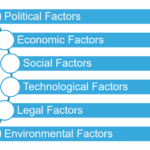
PESTLE analysis consists of components that influence the business environment and each letter in the acronym denotes a set of factors that directly or indirectly affect every industry. The Pestle analysis allows marketers to analyse the major environmental factors and examine the effect of these factors on marketing planning and implementation. What is PESTLE / […]
3 Levels of Strategy
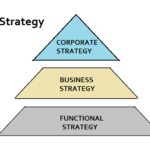
A strategy refers to the set of actions that managers in a company take to increase their company’s performance. The strategy formulation task is the task of selecting strategies, whereas strategy implementation is the task of putting strategies into action. Strategies can be divided into various categories such as Corporate-level strategies, Global strategies, business-level strategies […]
Resource Based View (RBV)
The resource-based view (RBV) of strategy asserts that the competitive advantage & superior performance of an organisation are explained by the distinctiveness of its capabilities. It is sometimes also called the ‘capabilities view’. Proponents of RBV (such as Birger Wernerfel, Prahalad and Hamel, Barney) suggested that a firm should look within the firm to find […]