
Project Based Learning (PBL) is an approach where students undertake projects that require them to apply academic concepts to real-world scenarios.
More schools and colleges are adopting this method of learning.
Not everybody learns in the same manner, there are many who prefer a hands-on learning approach, as opposed to learning only by reading or hearing. PBL is a teaching method that provides hands-on learning to students.
The project approach involves children in an in-depth exploration of a topic of interest — thinking about what they already know, asking questions that guide their investigations, and making decisions about the work to be done. As knowledge increases, children begin to process and express their learning through such activities as collecting data, making observational drawings and constructing models.
Parents are happy too. “The children do a lot of research on these projects. While working on their models they realise the practicality of a theoretical concept,” said a parent of a Mumbai based school.
Related: Integrated school projects.
Presentation skills is now a part of school curriculum from a very young age, starts in primary schooling itself. First standard students have to talk about projects in in front of their teachers. Small groups are formed, and one by one every student has to talk about their projects individually (each student has to explain whole project). And kids also have to present in front of parents.
PBL is a student-centered 21st Century educational model. PBL students develop high level critical thinking skills. They demonstrate flexible knowledge, metacognition, effective problem solving strategies, and deep understanding of content through collaboration and active learning.
In this teaching style, students work on a project for a considerable period of time with the intention of answering a more challenging question or solving a real-world problem. At the end of the project, the students demonstrate their knowledge and skills acquired through the project by creating a presentation (or even creating a public product).
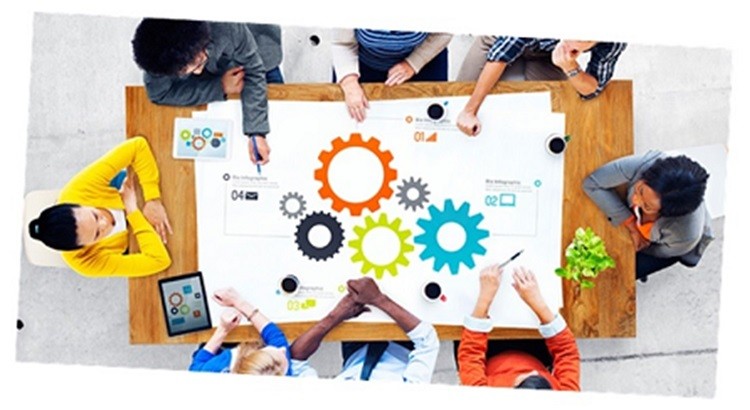
“Instead of rote memorization for the sole purpose of passing a test, project-based learning ignites leadership skills within students & creates memorable learning moments through real-world situations. PBL requires students to answer essential questions that take them beyond the walls of their classroom. PBL transforms students into lifelong learners who possess 21st century skills and are intrinsically motivated to solve complex problems for personal development & the betterment of the community.”
Combining PBL with the other curriculum enables schools to move to the forefront of learning in Mumbai’s competitive education community. University & college recruiters ask schools to give them students that are analytical, thinkers, & independent learners; the exact skills which PBL programme fosters in its students.
Project Based Learning (PBL) is gradually making its presence felt in schools in India and can teach students how to put theoretical knowledge into practice and learn to think on their feet.
Several schools also let students choose a few personal projects of their own liking that let them explore different topics and themes, which in turn help them acquire real-life skills that will benefit them in the years ahead.
Learning Targets: Global Awareness, Information Literacy, Visual Literacy, Multicultural Literacy, Adapting to or Managing Complexity, Self-Direction, Creativity, Risk-Taking, Teaming and Collaboration, Critical Thinking, and Effective Communication.

Leave a Reply