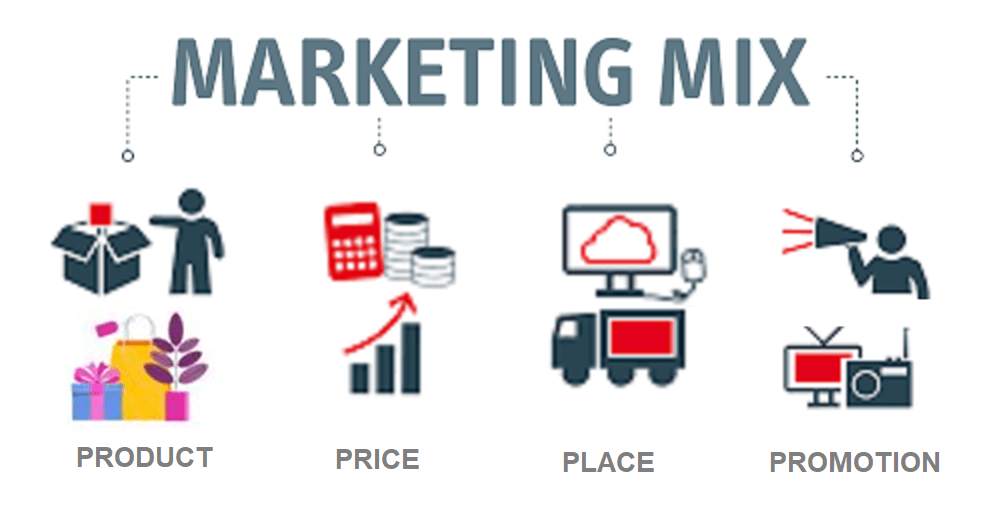
Despite the increasing significance of non-price factors in modern marketing, pricing remains an important element of the marketing mix and the only element that generates revenue; the others elements produce costs for the firm.
Here we take a look at price and its relationship with costs, quality, and value. We’ll understand the various approaches to pricing, how consumers and customers perceive price, how to price new offerings, and how pricing operates in the business-to-business setting.
Product Pricing refers to the ‘Price P’ of the Marketing mix.
- As a marketing technique marketing managers can raise, lower or maintain prices as part of the overall marketing strategy.
- Prices and pricing strategies may vary from country to country.
- A product may be positioned as a low-priced mass product in one country and as a premium-priced niche product in another country.
- There is a strong link between Pricing and the business model.
Setting Prices in the Global Marketplace
Factors Influencing Pricing Decisions
Pricing draws on: Accounting practice, Economics and Psychology
“Integrates all components to provide a better understanding of how the firm sets price to achieve higher profits and maintain satisfied customers” (Baines, Fill and Rosengren, 2017, p339)
“In marketing terms, we consider price as the amount the customer has to pay or exchange to receive an offering” (Baines, Fill and Rosengren, 2017, p342)
In setting pricing policy, a company usually follows the following procedure.
- It selects its pricing objective.
- It estimates the demand curve, the probable quantities it will sell at each possible price.
- It estimates how its costs vary at different levels of output, at different levels of accumulated production experience and for differentiated marketing offers.
- It examines competitors’ costs, prices and offers.
- It selects a pricing method.
- It selects the final price.
Questions related to Pricing:
There are more factors to consider when deciding on pricing:
- Quality: Does the price reflect the product’s quality?
- Competition: Is the price competitive given local market conditions?
- Pricing Objectives: What pricing objective (market penetration, market skimming, etc) should the firm pursue?
- Local Promotions: What type of discount (trade, cash, quantity) and allowance (ad, trade-off) should the firm offer its international customers?
- Segmentation and Targeting Strategy: Should prices differ with market segment?
- Demand Elasticity: If the firm‘s costs increase or decrease, what options are available? Is local demand elastic or inelastic?
- Politics & Legislations: How would the firm‘s prices be viewed by the host-country government? Do the foreign country‘s dumping laws pose a problem?
Many Markets are National (Rather than Global)
In a true global market, one price would prevail, and there exists a global market for certain products. Many markets however are national rather than global. The price of most products is heavily reliant on national markets.
Prices in different countries can vary due to market differences: differences in cost factors, intensity of competition, purchasing powers etc.
Heineken is the leading global brand. A six-pack of Heineken can vary in price internationally by as much as 50%.
Factors Influencing Pricing Decisions
Pricing decisions are influenced by Organisation’s objectives, External influences and Internal influences.
External Influences on Pricing strategy
Customers, Market structure & demand, Competitors, Channel members, Ethical, legal & regulatory considerations influence pricing.
Customers perceptions of price, value and quality, their price comparison ability or interest, household or organisational pressures, traditional pricing and service levels.
Internal Influences on Pricing Strategy
Costs, Targeting and positioning strategy, Promotion activities and channel members, PLC (pricing strategy at each stage).
More Factors
- Need to understand what the offering costs the company to make, produce or buy
- Money, time and resources sacrificed
- Fixed costs – don’t vary according to the number of units of goods made or services sold
- Variable costs – depend on the number of units of goods made or services sold
- Need to cover costs and make long term profits
Total revenue = volume sold x unit price. Profit = total revenue – total costs
Managing Global Pricing
Managing global pricing is more complex than establishing national pricing strategies.
There are three key factors that affect pricing policies in an international environment.
- Cost Factors
- Market Factors
- Environmental Factors
Cost Factors
This includes Local Production Costs, Transportation Costs, Tariffs and Taxes.
Transportation Costs
Products are often shipped over long distances. Many companies that charge higher prices in foreign markets than in domestic markets do so because of costs of shipping and transportation.
Example: ZARA. Zara is known for responding quickly to fashion trends and for delivering new stock quickly to its foreign operations. But with the distribution centered in Spain, prices increase the further a store is from the home base. Zara prices in the US can be 65% higher than they are in Spain
Tariffs
When products are transported across national borders, tariffs may have to be paid.
Taxes
A variety of local taxes also affect the final cost of products and different national taxes contribute to the different prices charged in different national markets.
Example: Sin Taxes. These are taxes assessed on products that are legal but are discouraged by the society. Cigarettes and alcoholic beverages commonly fall into this category (e.g. Sweden).
Local Production Costs
Differences in local production costs affect pricing as well. Relevant costs here: operating costs for materials, wages, energy may differ from country to country.
Example: KFC. KFC can charge lower prices on chicken in South Africa than it does in in the US because labor costs are cheaper. Also SA is a major producer of corn to feed the birds – this keeps costs down as well.
Market Factors
An effective pricing strategy reflects the realities of the market. It’s influenced by Income Level, Competition, Cartels, Culture and Consumer Behaviour.
Income Level
The income level of a country’s populations determines the amount and type of goods and services bought. In particular the discretionary income is relevant: the amount left after basic necessities such as food, shelter and clothing have been acquired.
Alternatives to increasing the price
Decreasing the product size/quantity. “Reverse Engineering” of Products: Procter & Gamble begins with an assigned price for a new product and the proceed to develop a product to fit the prize.
Culture and Consumer Behaviour
Culture can also affect consumer behaviour which in turn affects pricing. Local traditions, for example, can play a role in adverting prices.
Example: China. In China the number eight is associated with prosperity and good luck while number four is associated with death. Marketers in China avoid prices ending in four, whereas prices ending with 8 were advertised four times more often than prices ending with other numerals.
Competition
The intensity of competition can also significantly affect price levels in any given market. A firm acting as the sole supplier of a product in a given market enjoys greater price flexibility.
The company facing a competitor’s price change must try to understand the competitor’s intent and the likely duration of the change. Strategy often depends on whether a company is producing homogeneous or non-homogeneous products.
A market leader attacked by lower-priced competitors can seek to better differentiate itself, introduce its own low-cost competitor or transform itself more completely.
Cartels
Occasionally price levels are manipulated by cartels – pricing agreements between competitors. In many countries, cartel are forbidden by law.
Environmental Factors
Global marketers must deal with a number of environmental considerations such as inflation rates, exchange rate fluctuations, price controls when making pricing decisions.
Exchange Rate Fluctuations
- One of the most unpredictable factors affecting prices is the movement of foreign exchange rates.
- As the exchange rates moves up and down it particularly affects exporters.
- A weak domestic currency makes prices attractive for importers
- Example: A weak Euro is great for Germany as an exporter!
Inflation Rates
The United States and Europe have successful managed inflation by raising interest rates whenever the economy starts to heat up, keeping inflation at 0 to 3 percent. Historically inflation has been more of a problem in emerging economies.
Price Controls
Price controls be applied to an entire economy to combat inflation. Alternatively price controls can be applied selectively to specific industries.
Example: Pharmaceutical products are often subject to price controls. In the Philippines where one third of the country lives on 2$ a day, the government imposed price controls on five widely used medications.
Pricing Systems, Policies, Approaches
Due to differences in markets the global marketer must develop pricing systems and pricing policies that take into account price floors, price ceilings and optimum prices.
- Price floors: How much does your product cost to produce?
- Price ceilings: For how much do your competitors place their comparative products in the market?
- Optimum prices: what is the price between price floor and price ceiling at which your potential customers are willing and able to purchase the product?
Pricing Policies
List pricing – an unsophisticated approach to pricing where a single price is set for a product or service.
Loss-leader pricing – occurs where the price is set at a level lower than the actual cost incurred to produce it.
Promotional pricing – occurs when companies temporarily reduce their prices below the standard price for a period of time to raise awareness of the product or service to encourage trial, and raise brand awareness in the short term.
Segmentation pricing – where varying prices are set for different groups of customers, e.g. Unilever’s ice cream is offered as various different ice cream products at differing levels of quality and price ranging from their super premium (e.g. Ben & Jerry’s ice cream available in video shops, cinemas, and elsewhere) to economy offerings (e.g. standard low-priced vanilla ice cream available in supermarkets).
Customer-centric pricing—Cross and Dixit (2005) suggest that companies can take advantage of customer segments by measuring their value perceptions, measuring the value created, and designing a unique bundle of products and services to cater to the value requirements of each segment, and continually assess the impact this has on company profitability, taking advantage of up-selling.
Here are the various approaches.
The Cost-oriented Approach
Works on the basis that most important element in pricing offering is cost of productions. If we can make a set amount above what our product costs are, we earn a profit. One approach is mark-up pricing (used in retail sector).
To exemplify the concept, we use the example of a computer company selling high-quality laptop computers, at a cost of £1,000 per unit to make. Suppose computer company uses the mark-up pricing method, adding 67%. The final price set would be given by the equation below:
The Demand-oriented Approach
Works on the basis that firm sets prices according to how much customers prepared to pay. Best known in airline industry, where different groups of customers pay different amounts for airline seats with varying levels of service attached.
The Competitor-oriented Approach
In this approach, companies set their prices based on the prices of their competitors, the so-called ‘going rate’. This is also called ‘me-too’ pricing.
The advantage of this approach is that when your prices are lower than your competitors, customers are more likely to purchase from you, providing that they know that your prices are lower, which is not always the case.
Pricing Strategies
The four main pricing strategies include:
- Premium pricing – which focuses on pricing an offering to indicate its distinctiveness in the marketplace – eg Aston Martin
- Penetration pricing – where the price is set low relative to the competition to gain market share – eg Amazon initially adopted this strategy
- Economy pricing – where the prices are set at the bare minimum to attract price sensitive customers – eg Aldi
- Price skimming – where the price is initially set high, then lowered in sequential steps. This strategy is frequently used for the launch of new offerings – eg Apple iPhone
Market Skimming
Through market skimming, companies try to reach a segment of the market that is willing to pay a premium price.
Companies that seek competitive advantage by pursuing a differentiation strategy or positioning their products in the premium segment frequently use market skimming. LVHM and other luxury marketers that target the global elite market segment using a skimming strategy.
“For us, ‘Made in Italy‘ is so important, the quality and the artisans and the material is so important, that if we feel any kind of pressure on our profitability we will raise prices. We‘ve found that as long as our quality is maintained the customers are willing to pay a premium.” Marco Bizzari, chairman and CEO of Bottega Veneta.
Market Penetration Strategy
A market penetration strategy calls for setting price levels that are low enough to quickly build market share.
This strategy helps businesses to attract price-sensitive customers and gain acceptance in the market. The main objective of adopting this pricing strategy is to build a larger customer base and eventually gain a larger market share quickly.
Penetration pricing often means that the product may be sold at a loss for a certain length of time.
First time exporters are unlikely to use penetration strategy. They cannot absorb such losses, nor are they likely to have the marketing system in place that global companies have to make effective use of a penetration strategy.
Companion Pricing
When formulating pricing strategies for products such as video game consoles, DVD players and smartphones, it is necessary to view these products in a broader context.
A video game console has no value without video game software and a DVD player has no value without movies on DVD. The biggest profits in the video industry come from sales of game software. Even though Sony and Microsoft may actually lose money on each console, sales of hit video titles generate substantial revenues and profits.
Communicating Pricing Decisions
Price Anchoring: The value of something depends on what you are comparing it to.

Leave a Reply