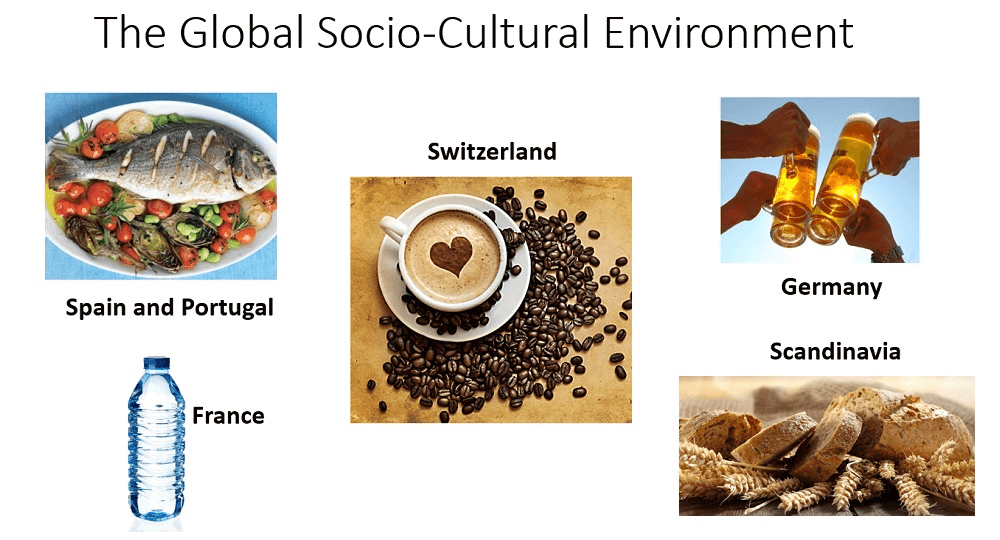
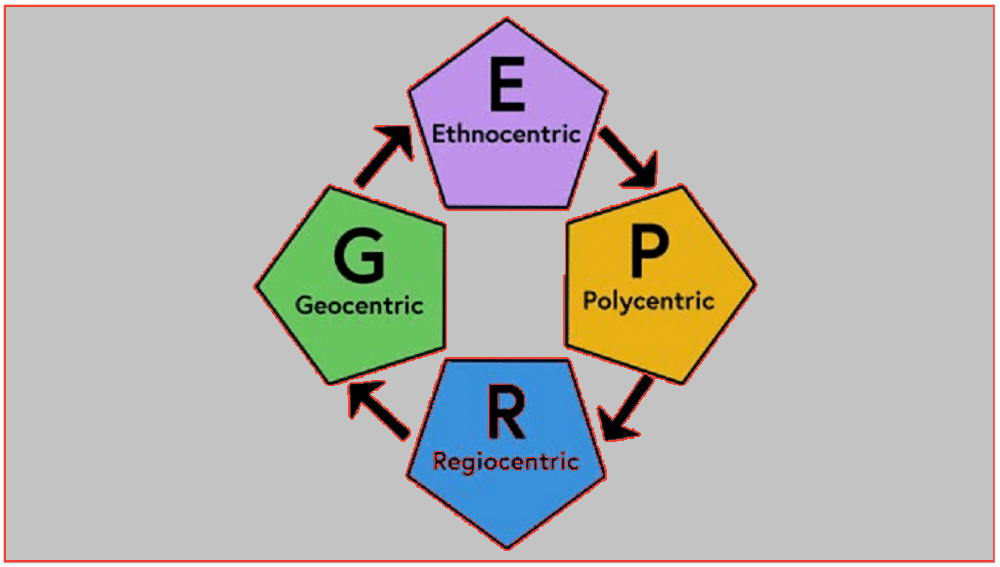
In attempting to understand anther culture, we inevitably, interpret our new cultural surrounding on the basis of existing knowledge of our own culture. There is a human tendency towards ethnocentricity. These ‘biased’ interpretations happen unconsciously, and they prevent cultural empathy. Lee (1966) introduces the self-reference criterion to characterize our unconscious reference to our own cultural values. Lee’s SRC teaches us unbiased perception.
The ‘Self Reference Criterion’ is defined as an unconscious reference to one’s own cultural values, experiences and knowledge as a basis for decisions. That means a person’s perception of market needs is framed by their own cultural experience and values.
To eliminate this myopia Lee (1966) proposes a systematic four step framework:
- Define the problem or goal in terms of home-country cultural traits, habits, norms.
- Define the problem or goal in terms of host-country cultural traits, habits, norms. Make no value judgments.
- Isolate the SCR criterion – how does the market need in the foreign country differ from the market need in the home country?
- Re-define the problem or goal without the SCR influence and solve it for the host country situation
Example
Here’s how can one apply the self-reference criterion analysis?
Scenario: The Walt Disney Company decides to build a theme park in France. But they don’t know yet how to enter the market.
Step 1: Define the problem or goal in terms of home-country cultural traits, habits, norms.
- American cultural exports are famous and valued not only in the US but also in the rest of the world
- American fast food and the no-alcohol policy are part of the Disney concept.
- The Disney castles and figures are celebrated universally.
- Exporting the theme park as it is, is considered authentic and will work in different countries.
Step 2: Define the problem or goal in terms of host-country cultural traits, habits, norms. Make no value judgments.
- Europeans and in particular French are sensitive to American Imperialism
- Europeans and in particular French have their own castles and fairy tales that they celebrate
- Non-Fast-Food and a glass of wine with a meal are highly appreciated and part of long established customs
Step 3: Isolate the SCR criterion – how does the market need in the foreign country differ from what is assumed in home country?
- The significant differences revealed by comparing findings in step 1 and 2 suggest that the needs upon which the American theme parks were based do not exist in France
- Modification in terms of design, food/drink and prevalence of “Americanness” are needed for European success.
Step 4: Re-define the problem or goal without the SCR influence and solve it for the host country situation.
- Allow an European/French identity in the theme park
- Adapt some castle and figure aspects and make them appear European and thus more “authentic” in the eyes of the Europeans
- Offer different food options.
- Abolish the non-alcohol policy
Here’s another example
Here’s a short article “Ramadan changes the way brands target Muslim consumers” (by Chris J Reed).
In this article, brands such as Burger King, McDonalds, KFC, Starbucks are described as being culturally quite sensitive, for example, in the Indonesien market.
So, if Burger King’s Marketing Managers wanted to conduct Self-Reference Criterion analysis before they entered the Indonesian market to come up with these culturally sensitive adaptions, here’s how the analysis would look like.
Burger King enters the Indonesian market.
Step 1: Define the problem or goal in terms of home-country cultural traits, habits, norms.
- American fast food is famous and valued not only in the US but also in the rest of the world
- Exporting the products, restaurants as they are is considered authentic and will work in different countries.
Step 2: Define the problem or goal in terms of host-country cultural traits, habits, norms. Make no value judgments.
- Customers in Indonesia appreciate American Fast Food
- Religious customs such as Ramadan require a different way of consuming the fast food
- Ramadan is an important holiday that allows family and friends come together, spend time and eat in the evening
Step 3: Isolate the SCR criterion – how does the market need in the foreign country differ from what is assumed in home country?
- Modification in terms of themed food/drink and opening times are needed in Indonesia
Step 4: Re-define the problem or goal without the SCR influence and solve it for the host country situation.
- When entering the Indonesian market, allow Muslim religious holiday to be acknowledged in the yearly calendar
- Offer special menus
- Offer space for families and friends to be able to spend time in the restaurant
References
Lee, J.A., 1966. Cultural analysis in overseas operations. The International Executive (pre-1986), 8(3), p.5.

Leave a Reply