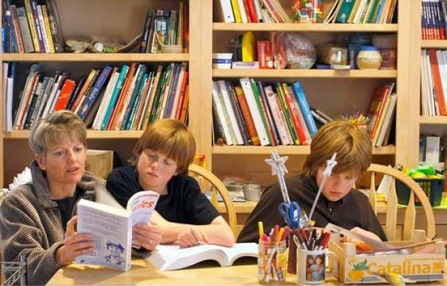
Homeschooling also known as home education is a form of alternative education, which exists in several countries, and is also gaining popularity in other countries including India.
- Homeschooling in India is legal! Homeschooling in India does not violate ay section or provision of the RTE.
Increasing Interest in Home-Schooling (in India)
Lot of parents in India are now discussing homeschooling due to:
- Exorbitant school fees (that keeps on rising year on year)
- Various safety reasons (instances of child molestation and accidents making headlines in the media).
- Education standards in schools, in general, have deteriorated in terms of level of teaching, experience and skills of teachers, creative freedom, personal attention, and safety measures.
However, the Covid-19 pandemic in 2020 has been the main reason that has piqued the interest of several parents, many of whom were actively trying to find out how does Homeschooling work in India.
Pros and Cons of Home Schooling
Home schooling is a popular concept abroad but is still in its nascent stages in India. Here are some pros and cons of home schooling.
Advantages
Parents understand the child’s strengths and weaknesses better, they are able to closely see their child’s progress and are able to better gauge their capabilities.
Parents can set the pace of learning, depending on how quickly or slowly your child learns, which eases the pressure on the child.
And, because parents are involved more, it increases the bonding between parents and the child.
Another important thing is that you can keep an eye on your child most of the time (which you cannot in school).
In a school, kids are under undue pressure most of the times and are not able to build their individuality (most schools are like factories).
Often, the child is just one more avenue for the management to promote their school further. They will publish a glossy magazine every year, give medals and prizes to students even for the smallest of achievements (with the reasoning that they are encouraging them), but the fact is that all these are promotional materials for the school, with the eventual aim of increasing the fees and trying to project the school as one for elites.
Disadvantages
One big disadvantage of homeschooling is that the child gets limited opportunity to socialize with other kids (on a bigger scale). This is disadvantageous more so for students who are naturally social or have natural leadership qualities, as they thrive in bigger social groups.
Now, irrespective of whether your child is social or reserved, if you opt for homeschooling, you will need to provide the child with more opportunities to interact with other kids, and with other people.
It means, you will need to enroll your child for extra-curricular activities like dancing, karate, sports, etc. where you child can interact with other kids.
Try to develop his/her hobbies further (go after their strengths), and avoid going online in such cases (opt for offline classes instead).
This is the best way to provide them with more social opportunities.
Because parents take over the role of the teacher, they may either become too strict (more critical) or too lenient with their kids.
So, in this case, the parents also need to be aware of their own limitations so that it doesn’t adversely impact the child’s development.
The academic knowledge of parents and their teaching methods may not be adequate or appropriate so they may have to be dependent on external tutors for certain topics.
This part however is becoming easier due to the easy available of tutors and online classes (there are many online education providers)
These are some of the reasons why home schooling is still not widely accepted, but parents are creatively working around those challenges.
What Are the Experts Saying?
One of the primary concerns with homeschooling is the lack of social interaction with peers. Critics argue that homeschooling can lead to social isolation, limiting children’s opportunities to interact with peers and develop social skills.
Some experts feel that homeschooled children may have fewer opportunities for spontaneous social interactions, and may need to work harder to form and maintain friendships, homeschooling can also limit exposure to diverse viewpoints and experiences.
While homeschooling can provide opportunities for socialization through extracurricular activities and community events, it is still important to consider the potential impact of limited socialization on a child’s development.
Supporters of homeschooling, however, point out that homeschoolers have ample opportunities to socialize with others outside of a traditional school setting.
Since homeschooling allows for greater flexibility in scheduling, children can actually participate in several extracurricular activities, volunteer, and engage in community events. Homeschooled children may also have more opportunities to interact with people of different ages and backgrounds, rather than being confined to a peer group of the same age.
Digital tools and resources have now made it easier for homeschooling families to access high-quality educational materials and connect with other homeschoolers around the world. However, some experts warn against the excessive use of technology as it can have negative effects on children’s development. It can cause sleep problems, attention issues, and other behavioral problems in children. Some experts feel that relying too heavily on digital tools can limit children’s creativity and problem-solving skills.
To strike a balance, many homeschooling families choose to use technology in moderation. They may limit screen time, prioritize in-person interactions and activities, and use digital tools in a purposeful and intentional way.
Home Schooling in India: How it Works (FAQs)
So here’s how homeschooling in India basically works.
- Find out the curriculum for the year: You need to find out the syllabus for the year (easily available online, you can even find the syllabus board-wise).
- Teaching the curriculum
You can then teach the syllabus on your own (if you have the time and the expertise).
Alternatively, you could hire tutors (readily available online) who will help your kids learn those topics. It’s like hiring one (or several) teachers who will teach (offline or online), usually at a lower cost (fees) that you would pay to the school.
A lot of families also come together to form local groups, learning centers, where kids of few families come together to learn regularly.
- Board Exam: Homeschooled students appear for board exams conducted by NIOS, IGCSE.
In the past, several students have successfully joined colleges and universities after appearing for board exams this way.
Certification: NIOS, IGCSE
Majority of home schooling families who seek to appear for equivalent of X or XII grade exam for certification or to be eligible for college admissions or higher education or entrance exams choose either Cambridge IGCSE or NIOS certification.
These certificates are equivalent to board certificates like ICSE, CBSE, State board certificates like SSC, HSC etc.Cambridge IGCSE Home Schooling or NIOS Homeschooling?
- NIOS Homeschooling is suggested as better option if board certificate is needed just for compliance or eligibility.
- NIOS certification is very economical compared to Cambridge IGCSE certification which can be expensive for many families.
- NIOS has better acceptability as equivalence by Association of Indian Universities(AIU) than Non Indian origin boards like Cambridge International.
- Some Homeschool families suggest Cambridge IGCSE curriculum is better suited for stimulating learning.
Information related to Cambridge IGCSE board is available at Cambridge website cambridgeinternational.org
Some IGCSE schools in Mumbai, Pune, Banglore, Kolkata and many other locations in India accept homeschoolers in India as private candidate to prepare and/or write exams for Cambridge IGCSE qualification as private candidates.
Cambridge IGCSE only suggests reference books and do not have specific textbooks. These reference books can be purchased from sites like Amazon, Flipkart, etc. online or from some specific stores.
NIOS offers Secondary Course equivalent to class X and Senior Secondary Course equivalent to class XII. NIOS also offers OBE (Open Basic Education) courses for lower classes. Candidate can register for NIOS online or through NIOS study center or regional center. Study material is posted to candidate.
Information related to NIOS is available at nios.ac.in

Leave a Reply