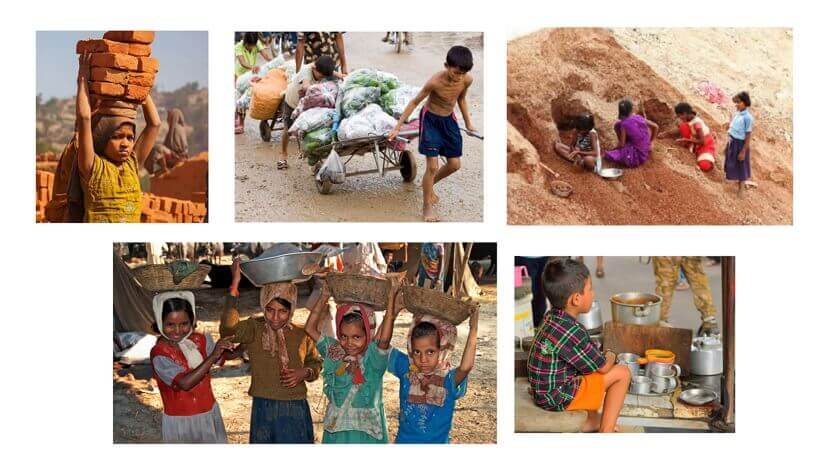
Child labour is a violation of human rights. India is sadly the home to the largest number of child labourers in the world. Children are engaged as household servants and are also employed by hotels, service stations, food stalls, workshops, construction sites, carpet industries, etc. They are even employed in hazardous and unhygienic forms of labour in textile, leather and cracker industries, depriving the children of their childhood, and harming their mental, emotional and physical development & well-being.
Here we take a look at compelling reasons for the existence of child labour in India, and strategies/action plan that can be adopted by business to make child labour unattractive and non viable.
Objectives of the topic:
- Increase understanding of Social Issues
- Get familiar with existing legislation
- Understand efforts of international organizations such as the International Labour Organization (ILO)
- Improve Research and Analytical Skills
- Learn to analyse Root Causes
- Develop effective Communication Skills
- Develop empathy and social responsibility
- Inspire real-world action.
Introduction
“There can be no keener revelation of a society’s soul than the way in which it treats its children.” This thought-provoking quote by Nelson Mandela highlights the profound impact of child labour on society and serves as a reminder to the society about the pressing need to find solutions to the critical issue of child labour.
The practice of employing children in any industry or business has been illegal for years and is considered exploitative for both the children and the country. Despite numerous legislative measures and international efforts to combat this social menace, child labour remains a pressing issue in India.
The popular film “Slumdog Millionaire” vividly depicts the harsh living conditions and challenges faced by children in impoverished areas in India, and how poor kids find themselves in circumstances where they do not have a choice but to indulge in some form of labour. The exploitation of children not only hampers their physical and mental development but is also detrimental to the overall development of the nation.
Causes of Child Labour
Several factors contribute to the prevalence of child labour in India.
One of the primary reasons is poverty. Families living in impoverished conditions often find it challenging to make ends meet, leading them to send their children to work instead of school. Lack of access to quality education is another factor. Many children from marginalized communities are denied the opportunity to attend school, contributing to a cycle of illiteracy and economic vulnerability.
Moreover, social and cultural norms play a role in supporting child labour. Many families employ children as domestic help to do household work. In some cases, children are forced into labour by their families due to societal expectations and economic pressures. Additionally, the absence of effective enforcement of child labour laws allows corrupt employers to exploit children for cheap labour, further perpetuating the problem.
Indian films like Salaam Bombay (1988), Slumdog Millionaire (2008), Stanley ka Dabba (2011), Chillar Party (2011), I am Kalam (2011) highlight these issues and how it contributes to employment and exploitation of child labourers.
Consequences of Child Labour
Child labour has far-reaching consequences that extend beyond the immediate impact on the children involved. It deprives them of their right to education, hindering their intellectual and emotional development. Working long hours in hazardous conditions jeopardizes their health and exposes them to physical and psychological harm. The vicious cycle of poverty and child labour also weakens the country’s long-term economic growth by contributing to a poorly educated and unskilled workforce.
Furthermore, child labour contributes to social inequalities and strengthens existing disparities. Children engaged in labour are often from marginalized communities, worsening the cycle of poverty and discrimination. This, in turn, hampers the overall progress and development of the nation.
Government Initiatives
Recognizing the gravity of the issue, the Indian government has taken several steps to address child labour.
The Child Labour (Prohibition and Regulation) Act, 1986, was a landmark legislation that aimed to regulate the employment of children and prohibit their engagement in certain hazardous occupations. Subsequent amendments have strengthened the legal framework, introducing stricter penalties for offenders and expanding the list of prohibited occupations.
The government has also implemented various schemes to promote education and discourage child labour. The Sarva Shiksha Abhiyan (SSA) and the Right to Education Act (RTE) are examples of initiatives aimed at ensuring access to quality education for all children. While these measures have had some success, challenges persist in effectively implementing and enforcing these laws, particularly in remote and marginalized areas.
Role of Civil Society and International Organizations
Civil society organizations and international bodies have played a crucial role in raising awareness about child labour and advocating for its eradication. NGOs such as Bachpan Bachao Andolan, and Child Rights and You (CRY) have been actively involved in rescuing and rehabilitating child labourers, as well as lobbying for policy changes.
International organizations like the International Labour Organization (ILO) have collaborated with the Indian government to develop strategies and action plans to combat child labour. The ILO’s conventions, such as Convention No. 182 on the Worst Forms of Child Labour, provide a framework for countries to address the issue and work towards its elimination.
Challenges and Future Prospects
Despite the efforts made by the government, civil society, and international organizations, challenges persist in the fight against child labour.
Enforcement of laws remains a significant hurdle, especially in informal and unregulated sectors. The need for a comprehensive and coordinated approach involving multiple participants and parties is crucial to address the root causes and consequences of child labour.
Education is seen as the key factor in breaking the cycle of child labour. Investments in education infrastructure, teacher training, and awareness campaigns are essential to ensure that children have access to quality education.
Additionally, efforts should be made to address the socio-economic factors that drive families to send their children to work.
Conclusion
Child labour in India is a deeply rooted problem with complex social and economic dimensions. The exploitation of children for economic purposes violates their basic rights and also hampers their physical and mental development.
In addition, child labour also perpetuates a continuous cycle of poverty engulfing several generations into poverty and child labour. This, in turn, impacts the future workforce and the overall development of the nation. While legislative measures, government initiatives and contribution of NGOs have helped to make progress, the persistent challenges require a determined effort from all sections of society.
It is imperative to prioritize education, enforce existing laws rigorously, and address the root causes of child labour to ensure a brighter future for the nation’s children. As individuals and as a society, we must strive to create an environment where every child can enjoy their right to education, protection, and a childhood free from exploitation.
Projects for ICSE students
Steps involved in doing projects on child labour in India.
- Understand the scope and objectives of the project.
- Identify reliable sources for information such as academic articles, news articles, government reports, and international organization websites.
- Conduct research to gather relevant information. Examine various aspects of child labour in India such as causes, consequences, legal frameworks, and solutions
- Outline the essay, define key sections, and write the essay.
- Reflect on learning experience throughout the project.
- Create Visual Aids: Pictures, Charts and Graphs

Leave a Reply